
Farmhouse Home Design Ideas: Rustic Charm Meets Modern Comfort
Farmhouse design is all about creating a feeling of warmth and practical simplicity. It’s a style that beautifully blends rustic charm with the way we live today, making it a fantastic choice for anyone who wants a home that feels both welcoming and genuinely lived-in.
Why People Still Love Farmhouse Home Design
Let's be honest, the farmhouse style is more than just a trend—it feels like coming home. It’s an entire aesthetic built on comfort, a nod to heritage, and a real connection to simpler times. This is less about specific decorations and more about creating a lifestyle, one where family gathers, memories are made, and life moves at a more comfortable pace.
This isn't just a feeling, either. The market reflects this enduring appeal. Modern farmhouse plans account for about 33% of all house plan sales on major platforms. That's a huge number, and it shows a powerful preference for its familiar, comforting vibe. You can see more data on the latest house plan trends right here.
A Style That Connects
So, what gives farmhouse design such lasting power? It’s that perfect balance between old and new. It honors the past with natural materials and classic shapes while fully embracing modern living with open layouts and clean lines. This adaptability is what makes it work for so many different people.
First-Time Homebuyers: They get a cozy, achievable look that makes a brand-new house feel like a home from day one.
Growing Families: The focus on open, functional spaces like great rooms and hardworking mudrooms is perfect for a busy, active lifestyle.
Seasoned Developers: Its proven popularity makes it a reliable choice for building homes that people genuinely want to buy.
The whole idea is simple: a farmhouse should function as beautifully as it looks. Every element, from a big wraparound porch to a practical mudroom, is designed with a purpose. It’s there to make daily life better, not just to look pretty.
More Than Just Shiplap
While certain things like shiplap have become famous, true farmhouse design goes much deeper. It’s really about authenticity and creating a home that tells a story—your story. Think of it as a design language that speaks of durability, resourcefulness, and community.
This guide walks you through the practical steps to bring that vision to life. We’ll cover everything from the iconic exterior features to the flow of a perfect floor plan. By the end, you'll have the inspiration and knowledge to pick or modify a plan, creating a home that’s not just stylish, but deeply and personally yours.
The Essential Elements of Farmhouse Style
To really nail down what farmhouse home design is all about, you have to look past the trends. It’s about understanding the core pieces that give this style its staying power. Think of it like learning the basic chords on a guitar; once you know them, you can play a thousand different songs. Farmhouse style speaks a language of simplicity, function, and warmth, and it uses specific architectural and interior features to tell its story.
This "visual language" is what turns a regular house into a home with a soul. From the outside, it’s all about creating an immediate feeling of welcome. Inside, the focus shifts to fostering connection and making daily life feel just a little bit easier.
Defining the Farmhouse Exterior
The curb appeal of a farmhouse is impossible to miss, thanks to its clean lines and practical, inviting features. These aren’t just for show; they grew out of the real needs of a working farm, built for durability and a deep connection to the land. Today, they create a timeless look that feels both grounded and graceful.
Three key features usually define the exterior:
Steeply Gabled Roofs: Those classic, triangular rooflines are more than just an iconic look; they were originally designed to shed snow and rain with ease. A popular modern take is to use bold, dark metal roofing, which creates a fantastic contrast against light-colored siding.
Welcoming Porches: A deep, covered porch is a signature element, often wrapping around the side of the home. It’s the perfect transitional space between outdoors and in—ideal for relaxing on a summer evening or chatting with neighbors.
Simple Siding: The look is clean and unpretentious. Board-and-batten siding, with its vertical planks and thin strips, adds texture and makes a home feel taller. Horizontal lap siding is another go-to choice for a classic, layered appearance.
Crafting the Warm Interior
Step inside, and the farmhouse philosophy continues with a focus on natural materials, open spaces, and hardworking details. The interior is meant to be a backdrop for life—unfussy, comfortable, and full of touchable textures. This is where the heart of the home really comes alive, blending practicality with a cozy, collected-over-time feeling.
The main goal is to create spaces that feel both spacious and intimate. You can achieve this by pairing open layouts with warm materials that beg you to reach out and touch them.
The real beauty of farmhouse interiors is in their honesty. Materials are often left in their natural state, celebrating things like wood grain, the unique variations in stone, and the beautiful patina of aged metal.
A few interior elements are absolutely fundamental to getting this authentic vibe right:
Natural Materials: Reclaimed wood beams, wide-plank hardwood floors, and stone accents on a fireplace or backsplash are the foundation. These materials bring a piece of the outdoors in and add a sense of history and texture, even in a brand-new build.
Open-Concept Living: The heart of the modern farmhouse is usually a "great room" that flows seamlessly between the kitchen, dining, and living areas. This kind of layout encourages family connection and creates the bright, airy feel that's perfect for entertaining.
Shiplap and Paneling: While shiplap walls have become incredibly popular, they're part of a larger tradition of adding texture through simple paneling. It adds a bit of architectural interest and a rustic touch without feeling heavy or overwhelming.
Key Details That Complete the Look
Beyond the big-picture items like layouts and materials, it’s the smaller, functional details that truly define the farmhouse aesthetic. These finishing touches are what really cement the style, blending usefulness with understated elegance.
For example, incorporating unique materials like Encaustic Cement Tiles Farmhouse Style can add a huge dose of authenticity, bringing beautiful patterns and a handcrafted feel to floors or backsplashes.
Other essential details include:
Apron-Front Sinks: Also known as farmhouse sinks, these deep, wide basins are both practical workhorses and stylish centerpieces for any kitchen.
Barn Doors: These are a fantastic space-saver and a striking visual feature. Sliding barn doors are perfect for separating rooms or hiding pantries and closets.
Simple Cabinetry: You can’t go wrong with Shaker-style cabinets. Their clean lines and recessed panel doors are a perfect match for the farmhouse kitchen—timeless, functional, and beautifully simple.
Vintage-Inspired Lighting: Gooseneck lamps, pendant lights with metal shades, and simple chandeliers add just the right amount of industrial or vintage flair to complement the rustic elements.
Key Farmhouse Design Elements at a Glance
To make things even clearer, here’s a quick-reference table that breaks down the key characteristics you'll find on the outside and inside of a modern farmhouse.
Feature | Exterior Characteristics | Interior Characteristics |
|---|---|---|
Overall Form | Simple, rectangular shapes with clean lines. | Open-concept great rooms; focus on flow. |
Roof | Steeply pitched gable roofs, often with metal. | Exposed beams or vaulted ceilings. |
Siding | Vertical board-and-batten or horizontal lap siding. | Shiplap or other simple wall paneling. |
Porches | Deep, covered front porches, often wraparound. | N/A (focus is on indoor/outdoor connection). |
Materials | Natural wood accents, stone bases. | Wide-plank wood floors, stone fireplaces. |
Windows | Large, often double-hung, with simple trim. | Large windows for natural light, minimal coverings. |
Key Features | Barn-style garage doors, simple columns. | Apron-front sinks, barn doors, Shaker cabinets. |
Color Palette | Classic white or light neutrals with dark accents. | Neutral and earthy tones, natural wood. |
This table serves as a handy checklist whether you're building new, renovating, or just looking to bring a bit of farmhouse charm into your current home.
Choosing a Floor Plan That Fits Your Life
Sure, the charming look of a farmhouse is what catches your eye, but a design that truly works is built on something you can't see: great flow. The right floor plan is the invisible framework that makes your day-to-day life feel easy and natural. It’s not just about square footage—it's about creating smart, intentional spaces that work for you.
Think of a great layout as the choreography for your family's daily routine. Rooms should transition smoothly from one to the next. High-traffic areas need to be designed to handle the morning rush without creating bottlenecks. The goal is a home that feels both open and cozy, where every inch has a purpose.
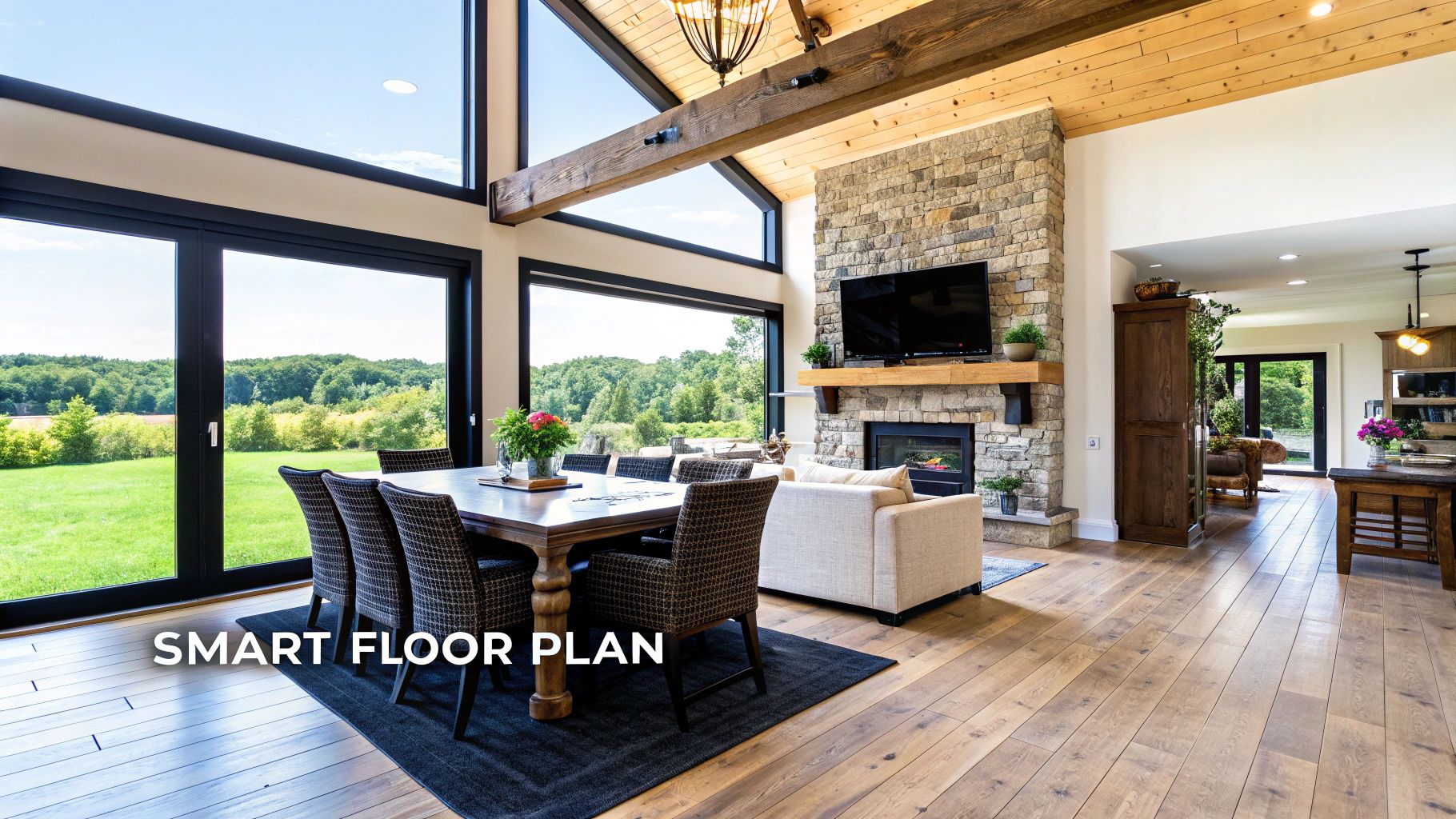
The Heart of the Home: The Great Room
At the center of almost every modern farmhouse is the celebrated open-concept layout, what we often call the "great room." This is more than just a big room; it's a living, breathing hub where the kitchen, dining space, and living room all flow into one another. This approach breaks down walls to encourage connection, making it simple to keep an eye on the kids doing homework while you’re cooking dinner.
The real magic of the great room is its flexibility. It's just as perfect for a quiet family movie night as it is for a bustling holiday party. By getting rid of those physical barriers, you create long sightlines that make the whole home feel bigger, brighter, and more welcoming—which is exactly what the farmhouse spirit is all about.
Planning Your Hardworking Zones
A great farmhouse plan really proves its worth with its practical, hardworking spaces. These are the unsung heroes of the home, the zones that keep clutter at bay and make daily routines run smoothly. A truly effective floor plan has to integrate these functional areas from the very start.
Here are the key zones to get right:
The Mudroom: Your essential transition space between the messy outdoors and your clean floors. A well-designed mudroom gives you a dedicated spot for muddy boots, wet coats, and school backpacks, stopping dirt in its tracks. The best ones include benches, cubbies, and maybe even a tough utility sink.
The Walk-In Pantry: It’s so much more than a closet for cereal. A real walk-in pantry is critical for storing bulk items, small kitchen appliances, and extra serving dishes. It keeps your countertops clear and your kitchen organized, which makes meal prep a whole lot less stressful.
A Dedicated Laundry Room: Where you put the laundry room can be a total game-changer. Placing it near the bedrooms makes putting clothes away a breeze. If it’s near the mudroom, it's perfect for tossing in dirty sports uniforms right away. Whatever you do, make sure there’s plenty of counter space for folding.
A floor plan isn't just a drawing of rooms; it's a blueprint for your daily life. The strategic placement of a mudroom or pantry can have a bigger impact on your day-to-day happiness than any decorative element.
Single-Story vs. Two-Story Farmhouse Layouts
Deciding between a single-story ranch and a two-story home is a huge decision that affects everything from your lifestyle to your budget. Each style has its own clear advantages, and the right choice really comes down to your family’s needs, the size of your lot, and what you see for your future.
To make a good call, it helps to understand how these layouts are organized. If you're new to this, you can learn more about reading these drawings in our detailed guide explaining what a floor plan is.
Single-Story Ranch Farmhouse:
Pros: Fantastic accessibility with no stairs, perfect for families with young children or those planning to age in place. It's often easier and cheaper to heat and cool. The simpler construction can sometimes mean lower building costs, too.
Cons: You'll need a larger piece of land to get the same square footage as a two-story home. It can also be a bit trickier to create a clear separation between the public living areas and private bedrooms.
Two-Story Farmhouse:
Pros: You can get more square footage on a smaller property, leaving you with more yard space. It offers a natural separation between living areas (downstairs) and private bedrooms (upstairs). Plus, you often get better views from the second floor.
Cons: Stairs can be a real challenge for some people. The family can also feel a bit less connected when everyone is spread out across different floors.
In the end, the best floor plan is the one that fits the unique rhythm of your life. By focusing on those hardworking zones and choosing a layout that feels right for your family, you’ll be creating a farmhouse that’s a place of comfort and ease for many years to come.
Finding Your Style: Modern vs. Traditional Farmhouse
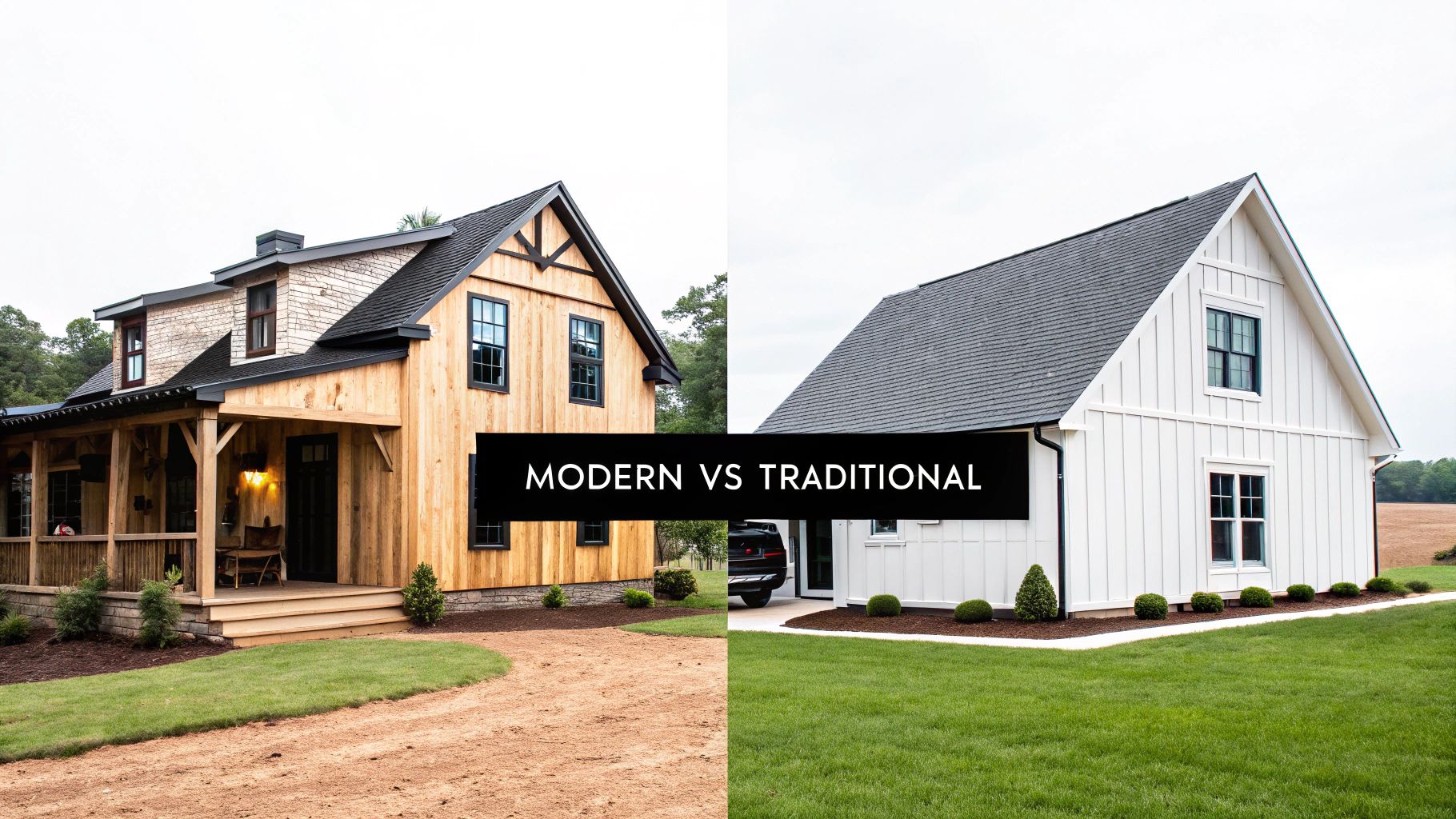
When you hear the word "farmhouse," you might picture one specific look, but the reality is that this style covers a surprisingly wide range of designs. It’s best to think of it like a family tree with two major branches. One branch is the traditional farmhouse, which feels like a cozy, hand-knit sweater—it’s all about warm, rustic materials and timeless colors that have stood the test of time.
Then you have the other branch: the modern farmhouse. This one is more like a tailored wool coat. It takes those same comfortable, rustic ideas and sharpens them up with clean lines, high-contrast colors, and sometimes even a few industrial accents. Figuring out the key differences between these two is the first step toward clarifying your own vision and finding the perfect plan for your home.
The Soul of Traditional Farmhouse Design
Traditional farmhouse style is deeply rooted in authenticity and history. The goal is to create a home that feels carefully collected over time, with every piece telling a story. The overall feeling is warm, welcoming, and completely unpretentious, staying true to its rural heritage. It’s less about looking perfect and more about feeling comfortable and genuinely lived-in.
The color palette here is soft and organic. You’ll find lots of creamy whites, gentle beiges, and muted earth tones pulled straight from nature. Wood is everywhere, but it’s often left in its natural state to show off its grain, knots, and beautiful imperfections.
Key characteristics of a traditional farmhouse include:
Warm Wood Tones: Think honey-colored pine, rich oak, or knotty alder. You’ll see it used generously on floors, furniture, and especially on exposed ceiling beams.
Vintage and Antique Finds: Furniture and décor often have a found feel, as if discovered at a local flea market or passed down through the family. Any scuffs, patina, or signs of wear are not just accepted—they’re celebrated.
Softer Color Palettes: Colors are drawn from an earthy, natural palette. Think sage green, buttery yellow, and classic barn red used as accents against a backdrop of warm whites.
The Clean Lines of Modern Farmhouse Design
The modern farmhouse takes the core principles of comfort and practicality and gives them a fresh, contemporary spin. It’s a much cleaner, more streamlined version of the classic, blending that beloved rustic charm with a minimalist sensibility. This style has exploded in popularity because it manages to feel both brand-new and completely timeless at once.
Here, the color palette is simplified and often relies on high contrast to make a statement. Crisp white is almost always the star of the show, paired with bold black accents on window frames, light fixtures, and cabinet hardware. This creates a striking look that feels both airy and grounded. While natural wood remains a key ingredient, it’s often used more strategically to add warmth to an otherwise neutral space.
The modern farmhouse is all about balance. It’s the artful mix of rustic textures with sleek, industrial metals and the pairing of classic forms with a minimalist color scheme.
This style is perfect for anyone who loves the cozy vibe of a farmhouse but prefers a less cluttered, more organized aesthetic. The emphasis is squarely on clean lines, open spaces, and intentional simplicity. You can dive even deeper into this popular style with our guide to modern farmhouse plans.
Key Distinctions at a Glance
To make the choice a bit easier, let's put these two styles side-by-side.
Element | Traditional Farmhouse | Modern Farmhouse |
|---|---|---|
Color Palette | Warm, earthy, and muted (creams, beiges, soft greens). | High-contrast neutrals (crisp white, bold black, gray). |
Wood Finishes | Natural, warm stains, often distressed or reclaimed. | Can be natural, but also painted or given a light, bleached finish. |
Metals | Oiled bronze, wrought iron, and antique brass. | Matte black, stainless steel, and brushed nickel. |
Decor | Vintage, collected, and sometimes eclectic. | Minimal, intentional, and often with an industrial edge. |
Furniture | Softer, more ornate lines, with a focus on comfort. | Clean, simple lines; often a mix of wood and metal. |
Ultimately, choosing between traditional and modern comes down to what feels right to you. Do you lean toward the warm, historic charm of a home that looks like it has been loved for decades? Or are you drawn to the bright, clean, high-contrast look that feels both rustic and new? The best part is, there are no hard-and-fast rules. You can always blend elements from both to create a home that is perfectly and uniquely yours.
Adapting Your Design for Budget and Location
You don’t need a custom-built price tag to get that authentic farmhouse feel. Likewise, the perfect farmhouse plan isn't a one-size-fits-all template; it has to work with its environment. By making smart, intentional choices, you can create a beautiful home that respects both your wallet and your local climate.
Think of it like a classic recipe. You can swap ingredients to make it more affordable or to suit regional tastes without losing what makes the dish special. The same idea applies to your home design—it's all about strategic adaptation to make it both beautiful and practical.
Building a Farmhouse on a Budget
The farmhouse look is more about form and feel than it is about expensive finishes. With a few savvy substitutions and a focus on high-impact details, you can get the look you love for less. The trick is to invest your money in the bones of the house and save on cosmetic touches that you can always upgrade later.
Here are a few proven strategies that won't break the bank:
Siding Solutions: Classic wood siding is gorgeous, but it's also costly and requires extensive maintenance. Fiber cement siding is a fantastic alternative. It’s durable, lower-cost, and does a great job mimicking the look of wood or board-and-batten, saving you cash on both the install and long-term upkeep.
Fixture Focus: Instead of splurging on designer everything, pick out classic, affordable fixtures. Simple gooseneck barn lights, matte black cabinet pulls, and timeless Shaker-style doors deliver a huge dose of farmhouse character without the high price.
Flooring Smarts: Wide-plank hardwood is the dream, but it's not always in the budget. Luxury Vinyl Plank (LVP) has come a long way, offering a convincing wood look that’s also highly durable and waterproof—all for a fraction of the cost.
The most effective budget strategy is knowing where to spend your money. Put your dollars into high-quality windows and a solid structure. You can save on things like light fixtures or cabinet hardware, which are easy to swap out down the road when your budget allows.
Finding that sweet spot between quality and cost is what it's all about. For a deeper dive, our guide on building a home on a budget offers detailed tips for making smart financial decisions.
Designing for Your Climate and Region
A true farmhouse feels connected to the land, so it should be designed to withstand the local weather. When you adapt your plan to your climate, you not only make your home more comfortable but also see significant long-term savings on your energy bills.
Think about how your region’s needs can shape the design:
For Hot, Southern Climates:
Deep, Shaded Porches: That classic wraparound porch is more than just a pretty face. It’s a passive cooling system that shields your windows from the harsh sun and creates breezy outdoor living areas.
Tall Ceilings: Higher ceilings are a game-changer in the heat. They allow hot air to rise, which helps keep the main living space much more comfortable.
Light-Colored Roofing: A lighter-colored metal or composite roof reflects sunlight instead of absorbing it. This simple choice reduces heat gain and lowers your cooling costs.
For Cold, Northern Climates:
Central Fireplace: A fireplace located in the heart of the home can be a powerful secondary heat source, radiating warmth throughout your main living areas.
Energy-Efficient Windows: Investing in double- or triple-pane windows is non-negotiable in colder regions. This is your best defense against heat loss, keeping your home cozy through long winters.
Attached Garages and Mudrooms: An attached garage gives you a sheltered entry from the elements. A well-designed mudroom acts as an airlock, stopping cold drafts from sneaking into the main house.
By thoughtfully adapting your farmhouse plans, you create a home that’s not only stylish but also resilient, efficient, and perfectly suited to its place in the world.
Bringing Your Farmhouse Vision to Life
So, you've spent time exploring all the big ideas in farmhouse design, from those classic gabled roofs down to the warm, inviting feel of an open great room. Now comes the exciting part: turning all that inspiration into a real, tangible plan for the home you've been dreaming of.
The best way to start this journey is with a solid foundation. Instead of starting completely from scratch, using a professionally designed, construction-ready blueprint can save you a ton of time and help you sidestep expensive mistakes down the road. These plans are your roadmap, ensuring every detail is up to code while still capturing the authentic farmhouse spirit you love.
From Blueprint to Reality
Honestly, picking the right plan is the biggest decision you'll make at this stage. It locks in your layout, your style, and how your home will function long before the first nail is hammered. Getting this right from the start is key to a smooth, successful build.
Think of a house plan not just as a technical drawing, but as a pre-approved recipe for your dream home. It provides the structure, ingredients, and instructions needed for a beautiful result, giving you the freedom to focus on the finishing touches that make it uniquely yours.
When you're getting close to finalizing your design, looking into the best architectural rendering software can be a game-changer. This kind of technology helps you see your vision come to life, confirming your choices and showing you exactly how different materials and colors will look in the finished space.
Ready to take the next step? We invite you to explore our curated collection of farmhouse home plans here at RBA Home Plans. Our detailed blueprints give you the clarity and confidence you need to start building. Find the design that speaks to you and begin the incredible journey of creating a home built for a lifetime of memories.
Frequently Asked Questions About Farmhouse Home Design
As you start exploring farmhouse home design ideas, it’s only natural for questions to come up. This style has a rich history that we're constantly blending with modern needs, so there are a few common points of curiosity. Let's tackle some of the most frequent questions to give you clear answers and help you move forward with confidence.
Is Farmhouse Style Still Popular?
Absolutely. While the super-trendy, "HGTV-style" modern farmhouse has mellowed out a bit, the core ideas behind farmhouse design are as popular as ever. People are still drawn to its warmth, its no-fuss simplicity, and the focus on creating functional, family-friendly spaces.
Think of it less as a trend that's fading and more like a classic that's just evolving. The style is becoming more personal, with homeowners mixing in unique touches rather than just following a strict formula. The emphasis on natural materials and comfortable layouts will always have timeless appeal.
How Can I Make Farmhouse Design Feel Unique?
This is where the fun starts. Making a farmhouse your own is all about the details you choose to bring in. The foundation might be classic—like board-and-batten siding or a big, open great room—but the finishing touches are where your personality really shines.
Here are a few ways to do it:
Bring in Antiques: Nothing adds character like something with a past. A vintage buffet, a collection of old pottery, or a weathered family heirloom adds a layer of history you can't buy new.
Play with Color: You don't have to stick to the all-white palette. Try a soft, dusty blue, a warm terracotta, or an earthy green on an accent wall, the kitchen island, or even just the front door. It’s an easy way to reflect your personal taste.
Add Modern Art: The contrast between a clean, modern painting and the rustic texture of a shiplap wall is fantastic. It creates a dynamic space that feels both current and timeless.
The best farmhouses feel like they were collected over time, not decorated in a weekend. Mix old with new, and don't be afraid to choose pieces that simply tell your story or make you happy.
What Is the Most Important Room in a Farmhouse?
Hands down, the kitchen has always been the heart of a farmhouse, and it still is today. It’s so much more than just a place to cook. It’s the central hub for the family—where meals are shared, homework gets done, conversations happen, and memories are made.
A great farmhouse kitchen is all about balancing function with a warm, welcoming feel. You'll almost always see a large island for gathering, a hardworking apron-front sink, and plenty of smart storage. It’s the one room that truly captures the spirit of hospitality and togetherness.
Ready to find a blueprint that can bring your vision to life? Explore our curated collection of construction-ready plans at RBA Home Plans. Our award-winning designs are the perfect starting point for your dream home. https://rbahomeplans.com


Thanks for sharing this useful content. I recently visited Vulcan Hats Construction while checking options for a home renovation company in brampton.