
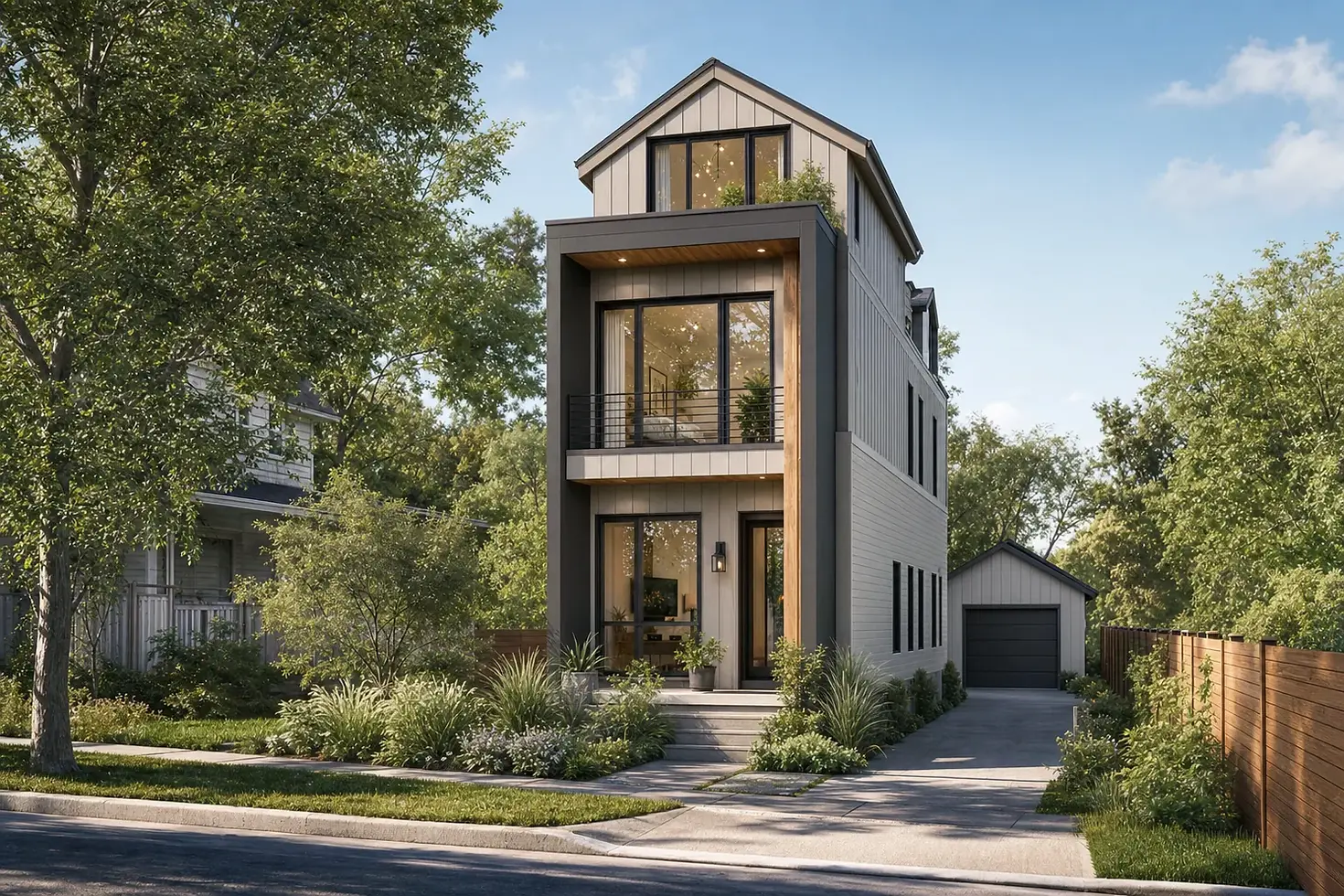
How to Choose a House Plan for Narrow Lots
Buying a house plan for a narrow lot requires a different approach than selecting a plan for a standard property. When your lot is constrained by width, every square foot counts, and the right design can transform limitations into advantages. Understanding what to look for helps you avoid costly mistakes and ensures your future home fits both your land and your lifestyle.
Why Narrow Lot Plans Demand Careful Selection
Narrow lots are increasingly common in established neighborhoods, urban infill projects, and traditional neighborhood developments. They offer real benefits: lower land costs, closer proximity to amenities, and often a sense of community. However, they also present specific design challenges that a standard house plan simply cannot solve.
When a plan is not designed with narrow dimensions in mind, you may face issues like cramped interiors, poor natural light, awkward traffic flow, or garages that consume too much of your buildable space. Choosing a plan specifically created for narrow lots means the architect has already solved these problems, optimizing the footprint for livability and code compliance.
Understanding Your Lot Dimensions
Before you start browsing plans, know your lot's exact measurements. Lot width is the critical factor for narrow-lot homes, typically ranging from 35 to 60 feet. You also need to know the depth, setback requirements (how far the house must sit back from the street), and easements that might affect where you can build.
Once you have these dimensions, look for plans that specify they are designed for lots at least as wide as yours. Many builders make the mistake of selecting a plan wider than their actual lot, then spending thousands on modifications. RBA Home Plans' catalog includes searchable options that account for these real-world constraints, helping you find designs that fit without expensive redesigns.
The Rear Access Garage Advantage
One of the smartest features for narrow lots is a rear access garage. Unlike traditional front-facing garages that consume valuable street-facing width and dominate your home's appearance, rear access garages sit behind the home and are typically accessed from an alley or side drive.
This layout delivers several benefits:
Maximizes curb appeal: Without a large garage door visible from the street, your home's front facade can showcase attractive entry details, windows, and architectural character.
Reclaims interior space: The footprint saved by tucking the garage to the rear can be redirected into living areas, making your home feel larger and more open.
Improves walkability: The front of the lot can remain open and inviting, supporting a porch, stoop, or small garden that strengthens neighborhood connection.
Protects your investment: Front-facing garages can look dated quickly, while a charming front elevation ages gracefully.
When evaluating narrow-lot plans, prioritize rear-access designs or side-load garage configurations. These are specifically engineered to make narrow lots work at full potential.
Vertical Design and Smart Layouts
Narrow lots push architects to design vertically rather than horizontally. This means building up with two or three stories instead of spreading a single story across a wider footprint. Vertical design is not a compromise; when done well, it creates efficient, livable homes.
Look for plans that feature:
Open floor plans on main living levels to prevent a chopped-up feel
Strategic staircase placement that does not waste prime real estate
Bedrooms on upper floors, freeing the ground level for living and entertaining
Large windows positioned to bring natural light deep into the home
Efficient hallways and circulation that do not eat up usable square footage
An award-winning architect with decades of experience, like those behind RBA Home Plans, understands how to make vertical living work. Their designs balance privacy, functionality, and the spaciousness all homeowners want, regardless of lot size.
Storage and Functionality Matter
Narrow lots often come with smaller square footage, which means storage becomes precious. When reviewing plans, pay close attention to closet design, pantry space, and built-in storage solutions. Some plans cleverly incorporate under-stair storage, wall-mounted shelving, or utility rooms that maximize every inch.
Also consider how the plan handles everyday functionality. Can you easily move furniture into bedrooms? Is the kitchen layout efficient, or will cooking feel cramped? Do you have dedicated spaces for hobbies, home office work, or laundry? These details matter far more on a narrow lot than they do on a sprawling property.
Checking Code Compliance and Buildability
Not all plans are legal to build everywhere. Zoning laws, setback requirements, and local building codes vary by jurisdiction. When you select a plan from RBA Home Plans, you benefit from designs that are approved for use in more than 30 states. This approval reflects that the plans have been vetted against common code standards.
Still, before committing, verify with your local building department that your chosen plan complies with your specific lot, zoning, and municipal rules. Sometimes a small modification is needed, but starting with a plan designed by a credentialed architect means those changes will be minor rather than fundamental.
Find Your Perfect House Plan Browse architect-designed plans ready to build, starting at $1,395. Browse Plans
Making Your Final Decision
Choosing a house plan for a narrow lot is about balancing practical constraints with your vision for a home. A rear access garage, thoughtful vertical design, and smart space planning are hallmarks of plans that work on constrained properties.
Take time to review multiple options. Examine how each plan addresses the narrow lot challenge. Read the specifications carefully. Picture yourself living in the spaces. A well-designed narrow lot home can offer more character, efficiency, and livability than a larger home on a standard lot.
When you are ready to move forward, RBA Home Plans offers architect-designed options that combine aesthetics, functionality, and code compliance. Starting at just $1,395, a professional plan saves you from costly trial-and-error during construction and sets the foundation for a home you will love for years to come.


Comments