
How to Maximize Small Spaces with Smart Design
Before you even think about furniture or paint colors, the secret to making a small home feel great is its flow. A smart, efficient layout is the foundation for everything else. It’s all about creating clear pathways and defining functional zones so that every single square foot feels intentional, not accidental.
This first step is what prevents that frustrating, cluttered feeling and transforms a potentially cramped area into an open, inviting home.
Rethinking Your Floor Plan for Better Flow
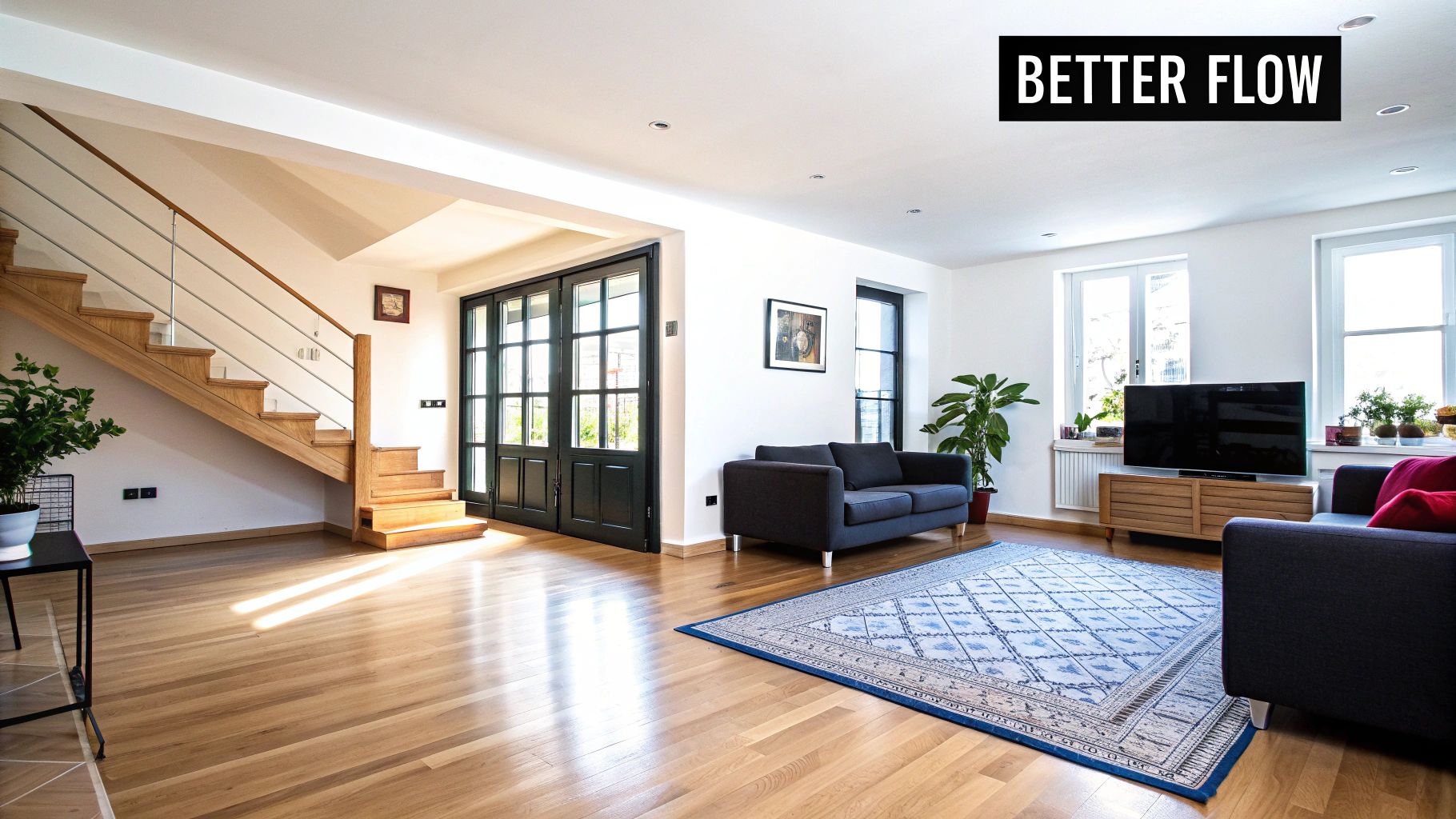
An intelligent layout can make a compact home feel downright expansive, while a poor one makes even a larger space feel chaotic and tight. The real goal is to create a seamless experience as you move from one room to another, eliminating those awkward bottlenecks and dead ends. This isn't always about knocking down walls; often, it’s the small, thoughtful decisions that completely change how you live in the space every day.
This focus on efficiency isn't just a design trend—it's a market reality. New single-family home sizes have actually been shrinking since 2015, largely due to housing affordability challenges. The median size for a new single-family home now hovers around 2,176 square feet, a clear sign that builders and buyers are embracing smaller, more efficient designs to manage costs. This shift, noted by the National Association of Home Builders, underscores why knowing how to make the most of your space has become such a critical skill.
Establishing Clear Circulation Paths
First things first, you need to map out your home’s "circulation paths"—think of them as the invisible lanes people naturally use to walk through a room or from one doorway to another. These pathways have to be clear and wide enough for comfortable movement, which usually means about 30 to 36 inches of open space.
A classic mistake is placing a sofa or a coffee table right in the way, forcing everyone to shuffle sideways to get past. To avoid this, try to visualize lines on your floor plan connecting all the doorways. These are your main traffic arteries. Any furniture that creeps into these lines is going to create a pinch point. Keep them clear, and the room will instantly feel more organized and open.
Defining Zones in Open-Concept Layouts
Open-concept living is a go-to for small homes, but without some definition, the space can feel like one big, jumbled room. The trick is to create distinct "zones" for different activities—living, dining, working—without actually putting up walls.
You can pull this off with a few clever visual cues:
Area Rugs: An area rug is one of the easiest ways to signal a zone. Placing one under your seating area clearly defines the living room. You can use a different rug or a runner to mark the dining space.
Furniture Grouping: Arrange your sofa and chairs to face each other. This simple act creates a conversational nook that feels distinct and separate from the rest of the room.
Partial Dividers: Something like a tall, open-backed bookcase or a slatted wood screen can create a sense of separation while still letting light and sightlines pass through, keeping the airy feel.
By assigning a specific purpose to each area, you bring a sense of order and intention to the floor plan. That mental organization translates directly into a feeling of physical space and calm.
Making Small but Mighty Structural Changes
Sometimes, a minor architectural adjustment can have a massive impact on your home's functionality. These aren't necessarily full-scale renovations, either. For example, simply changing a door’s swing from inward to outward can free up precious floor space in a tight bathroom or bedroom.
You might also consider removing a non-load-bearing wall that separates a small kitchen from the living area. This one change can flood both spaces with natural light and create a much more sociable, expansive atmosphere.
If you’re still in the planning stages of a build, our guide to small home floor plans offers a deep dive into selecting layouts that are inherently efficient right from the start. Making these foundational choices is the single most effective way to maximize your space before construction even begins.
Mastering Storage with Built-In Solutions
When you're trying to make a small space feel bigger, conquering clutter is non-negotiable. Freestanding furniture can quickly eat up precious floor space, but built-in solutions are different. They weave storage directly into your home's architecture, making organization feel intentional and totally seamless.
This is more than just adding shelves; it's a way of thinking. Instead of seeing an awkward corner or the void under a staircase as a problem, you start to see it as an opportunity. An opportunity for custom storage that perfectly fits your life and simply disappears into the walls.
Transforming Overlooked Real Estate
Your home has hidden storage potential. You have to know where to look. The trick is to scan your space with a fresh, creative eye and imagine these underused areas with a new sense of purpose.
Think about these common dead zones:
The Space Under the Stairs: The classic example of wasted real estate. Instead of a dark, forgotten closet, it could become a set of deep pull-out drawers for shoes and gear, a compact office nook, or even a cozy built-in dog den.
Awkward Corners: That tight corner where a chair just won’t fit? It’s the perfect spot for floor-to-ceiling triangular shelves. You’d be surprised how much they can hold—books, decor, you name it—without intruding into the room.
Above Doorways: The vertical space over interior doors is almost always empty. A simple, deep shelf installed here is an ideal spot for things you don't need every day, like extra linens or seasonal decorations.
The real goal here is to make every single square inch work for you. By claiming these forgotten zones, you add a surprising amount of storage without sacrificing an inch of your main living area. That’s the core of smart small-space design.
Comparing Popular Built-In Options
Not all built-ins are created equal, and the right choice really comes down to your room's layout and what you need to store. Each option brings something unique to the table.
A window seat with hidden compartments is one of my favorite multi-functional pieces. It gives you a comfortable spot to sit, usually with a great view, while the base can hide blankets, board games, or off-season clothes in either a lift-top compartment or deep drawers.
If you have a large collection of books or keepsakes, floor-to-ceiling bookcases are unbeatable. They do a fantastic job of drawing the eye upward, which creates an illusion of height, and can hold a massive amount of stuff. In an open-concept home, a well-placed bookcase can even serve as a subtle room divider, defining zones without blocking natural light.
Finally, a custom-built wardrobe or closet system is the ultimate organizational tool. You can design specific compartments for your exact wardrobe—from shoe racks and tie drawers to double-hanging rods for shirts and pants. This ensures not a single inch of closet space goes to waste, which is absolutely critical in a small bedroom.
Integrating Built-Ins During a Renovation
If you’re already renovating or building from the ground up, you have the perfect chance to weave these features in from the very beginning. When you plan for built-ins during the design phase, they look like a high-end, original feature instead of an afterthought.
Work with your designer or builder to spot opportunities right on the blueprints. For instance, you could recess shelves directly into the wall between the studs. This creates "found" storage that doesn't project into the room at all—an incredibly effective trick for small bathrooms and narrow hallways.
You can also design architectural features that pull double duty. A half-wall separating a kitchen and living area can be built to house cabinets on one side and bookshelves on the other. This adds huge functionality and a custom touch that elevates the entire home. Exploring the top storage solutions for small homes in 2025 can spark even more ideas for your project. By planning ahead, you can create a space that isn't just beautiful but exceptionally hardworking.
Choosing Furniture That Works Smarter, Not Harder
In a compact home, every piece of furniture has to earn its keep. The trick is to stop thinking about just filling a room and start thinking about strategically equipping it. This all comes down to two simple principles that go hand in hand: picking pieces that are the right scale and investing in items that can do more than one job.
Hands down, the most common mistake I see in small-space design is oversized furniture. That massive, plush sofa looks incredible in a cavernous showroom, but in a modest living room, it just suffocates the space. The goal is to find pieces proportional to your room’s dimensions, leaving enough breathing room to create a sense of ease and flow.
Selecting for Scale and Openness
Before you even think about buying, map it out. A roll of painter's tape is your best friend here. Use it to outline the dimensions of a potential sofa or media console right on your floor. This incredibly simple trick gives you a real-world feel for how much space an item will actually take up and whether it will block a major walkway.
Another fantastic strategy is to go for “leggy” furniture. Sofas, armchairs, and tables raised up on slender legs let you see more of the floor. This creates a powerful illusion of spaciousness and light, making the entire room feel more open and airy compared to heavy, skirted pieces that sit flat on the ground.
By prioritizing furniture that's visually light, you trick the eye into seeing more available space than there actually is. It’s less about the
Embracing Multi-Functional Heroes
Beyond just the right size, the real game-changers in a small home are the pieces that work double, or even triple, duty. These clever items are the secret weapons for maximizing a tight floor plan because they consolidate functions, meaning you need fewer things overall.
Start training your brain to see the hidden potential in every piece:
The Transforming Coffee Table: Look for one with a lift-top that can pop up to become a comfortable dining surface or a perfect work-from-home desk.
The Storage Ottoman: A good-sized ottoman is a triple threat—it's a footrest, extra seating for guests, and a hidden chest for blankets, board games, or toys.
The Modular Sofa: Sectionals with movable pieces let you adapt your seating to any situation, whether it's a cozy movie night or a get-together with friends.
For the ultimate space-saver in a bedroom or guest area, you can’t beat innovative solutions like Murphy cabinet and chest beds that fold away completely. In seconds, a home office or den can become a comfortable guest room. Now that’s furniture that’s working smarter.
When it comes to furniture that does double duty, the options are surprisingly vast. Here’s a quick comparison of some popular choices to help you decide what might work best for your home.
Multi-Functional Furniture Ideas for Small Spaces
Furniture Piece | Primary Function | Secondary Function(s) | Best For |
|---|---|---|---|
Lift-Top Coffee Table | Coffee table | Dining table, workstation | Living rooms that double as dining areas or offices |
Storage Ottoman | Footrest, extra seat | Hidden storage for blankets, games, etc. | Living rooms and family rooms need clutter control |
Sleeper Sofa/Sofa Bed | Seating | Guest bed | Apartments or homes without a dedicated guest room |
Nesting Tables | Side table, coffee table | Can be separated for extra surface area | Flexible living spaces where needs change frequently |
Bed with Storage Drawers | Bed | Under-bed storage for clothes, linens | Bedrooms with limited closet space |
Convertible Desk | Desk | Folds into a console table or shelf | Multi-purpose rooms, hallways, or entryways |
Choosing the right multi-functional piece is all about matching its capabilities to your specific lifestyle. By thinking through how you'll use a room day-to-day, you can select furniture that solves multiple problems at once.
Using Light and Color to Create Space
Some of the most powerful tools for making a room feel larger are also the most accessible. Light and color are your secret weapons in the quest to maximize small spaces. They can visually push back walls, raise ceilings, and create an atmosphere of airy openness. This isn't just about painting everything stark white; it’s about understanding how certain hues and thoughtful lighting work together to trick the eye.
The right combination can transform a cramped, dim room into one that feels bright, welcoming, and significantly more expansive. It’s a design strategy that delivers a huge return on investment, requiring far less commitment than structural changes but offering a similarly dramatic impact.
Moving Beyond Basic White
The old advice to paint every small room white isn't necessarily wrong, but it is incomplete. Light colors absolutely reflect more light, but a single shade of flat white can sometimes feel sterile or just plain boring. A much more effective approach is to use a sophisticated, cohesive color palette.
Here are a few powerful alternatives to consider:
Monochromatic Schemes: This is my go-to for small spaces. It involves using different tones and shades of a single color. A palette of soft grays, calming blues, or warm beiges creates a seamless look that helps blur the room's boundaries, making it feel more spacious.
Cool Hues: Colors like soft blues, greens, and lavenders have a receding quality, making walls feel farther away than they actually are. It’s a classic optical illusion that works every time.
Strategic Dark Accents: Don't be afraid of dark colors entirely! A dark accent wall at the far end of a narrow room can create a sense of depth, drawing the eye through the space and making it appear longer.
The key is visual continuity. When the walls, trim, and even the ceiling are painted in similar light shades, you eliminate the hard lines that define the room's edges, creating a softer, more boundless effect.
Building a Layered Lighting Plan
A single, lonely overhead light fixture is one of the biggest mistakes you can make in a small room. It casts harsh shadows and creates a "pooling" effect, making the room's corners disappear into darkness. You're much better off layering your lighting with multiple sources at different heights.
A successful lighting plan includes three key layers:
Ambient Lighting: The room's general illumination. It can come from a central fixture, recessed lighting, or track lighting, providing a comfortable base level of brightness.
Task Lighting: This is focused light for specific activities. Think of under-cabinet lights in the kitchen, a reading lamp next to a chair, or a desk lamp in a home office nook. It’s practical and adds dimension.
Accent Lighting: Used to highlight architectural features or decor. A picture light over a favorite piece of art or an uplight behind a plant can add real depth and visual interest.
By combining these three types, you create a well-balanced and inviting atmosphere. The light is distributed more evenly, eliminating dark corners and making the entire room feel more usable and spacious.
Using Mirrors to Amplify Light
Mirrors are the ultimate trick for maximizing small spaces. They are essentially "windows" you can place anywhere to make a room feel bigger and brighter instantly. They work by reflecting both natural and artificial light, bouncing it around the room and effectively doubling its impact.
For maximum effect, place a large mirror directly opposite a window. This will capture the outdoor view and the daylight, creating a powerful illusion of depth. You can also hang a collection of smaller mirrors in a gallery wall arrangement or lean a tall, full-length mirror against a wall in a narrow hallway to make it feel wider. This simple addition is one of the most effective and affordable tricks in the book.
Thinking Vertically and Extending Outdoors
When you’ve maxed out your floor plan, the only place left to go is up. A key strategy in making small spaces work is to look beyond the horizontal and really embrace the vertical real estate your home offers. It's a simple trick that draws the eye upward, creating an illusion of height and volume while unlocking storage and functional areas you didn’t even know you had.
This isn’t just about hanging a few extra shelves. It's a fundamental shift in how you see your space. Instead of viewing walls as simple dividers, you start to see them as opportunities for organization, display, and even living space. By going vertical, you keep the floor clear—a critical move for maintaining those open circulation paths that make a small home feel uncrowded and easy to live in.
Capitalizing on Wall Height
Every inch of wall space, from floor to ceiling, is a potential asset. Tall, narrow shelving units are a classic for a reason; they offer a ton of storage without eating up a large footprint. They're perfect for books, decor, or even kitchen supplies, turning a blank wall into a hardworking feature.
Floating shelves and desks are another fantastic tool in the small-space arsenal. By mounting them directly to the wall, you get rid of bulky legs that just take up precious floor space. This creates a clean, minimalist look and keeps the ground level clear, which goes a long way in making a room feel more open and airy. It’s an especially great move for carving out a compact home office nook that doesn't feel like it’s taking over the room.
Go Floor-to-Ceiling: Taking bookcases or custom shelving all the way to the ceiling not only maximizes storage but also adds a surprising sense of grandeur.
Use Wall-Mounted Organizers: In a tight kitchen or craft room, things like magnetic knife strips or wall-mounted bins can free up counter and drawer space you desperately need.
Consider a Loft: If your home has high ceilings, a loft can be a total game-changer. It could become a cozy sleeping area, a quiet reading nook, or a bonus storage zone, effectively adding square footage without a major renovation.
Blurring the Lines Between Indoors and Out
One of the most impactful ways to make a small home feel larger is to connect it—both visually and functionally—to the outdoors. When your living space flows seamlessly onto a patio, deck, or garden, the perceived size of your home expands dramatically. This creates a psychological sense of openness and gives you an entirely new "room" for relaxing, dining, or entertaining.
The goal is to completely dissolve the boundary between inside and out. When that transition is smooth and inviting, your brain registers the outdoor area as a genuine extension of your indoor living space, not just a separate yard.
This connection makes the home feel brighter, more dynamic, and deeply tied to its surroundings.
Creating a Seamless Indoor-Outdoor Flow
Pulling off this seamless transition comes down to a few key design choices. Large glass doors, like sliding panels or classic French doors, are probably the most critical piece. They flood the interior with natural light and provide an uninterrupted view of the outdoor area, instantly making the indoor space feel more expansive.
Another powerful technique is to use continuous flooring. When the material on your living room floor extends right out onto the patio—or at least closely matches the patio's color and style—it tricks the eye into seeing one large, continuous space. You’ve removed the visual "stop" that a different flooring material creates right at the threshold.
Finally, furnish your outdoor area as if it were just another room in the house. Use comfortable, weather-resistant furniture, lay down an outdoor rug, and even add some lighting to create a true outdoor living room. The more inviting and functional you make the outdoor space, the more it will feel like a natural part of your home.
If you're looking for inspiration, exploring well-designed house plans with outdoor living spaces can show you how architects masterfully integrate these two zones from the very beginning. By thinking vertically and extending outwards, you can dramatically increase both the function and the feel of a small home.
Common Questions About Maximizing Small Spaces
Even with a great plan, a few tricky questions always seem to pop up once you start moving furniture. Let's tackle some of the most common ones I hear from homeowners trying to make the most of a smaller footprint.
Getting these details right can make all the difference, and my goal is to give you the confidence to make smart calls for your own unique layout.
What Is the Best Rug Size for a Small Living Room?
This is a classic, and the right answer goes against what most people assume. The common mistake is buying a small rug, thinking it will make the room feel bigger. It almost always does the opposite, making the space feel choppy and disconnected.
The best approach? Go bigger. Choose a rug that’s large enough for at least the front legs of your main furniture pieces—like the sofa and any armchairs—to rest on it comfortably. This simple move creates a single, unified zone that anchors the room, making it feel more expansive and better thought out. If you have the space to get all the furniture entirely on the rug without it hitting the walls, that's even better.
A larger rug is a powerful design trick. It defines the entire living area as one generous space instead of a collection of floating items, which immediately brings a sense of calm and order.
How Do I Deal with Low Ceilings?
Low ceilings can be a challenge, but you can absolutely create an illusion of height. The key is to draw the eye upward.
Here are a few of my go-to strategies:
Hang Curtains High and Wide: This is non-negotiable. Mount your curtain rod several inches above the window frame—as close to the ceiling as you can—and extend it well beyond the frame on both sides. Let the curtains drape all the way to the floor. It instantly makes the window and the entire wall feel much taller.
Embrace Vertical Stripes: You don't have to go bold, but a subtle vertical stripe on wallpaper or even a painted accent wall creates a powerful visual lift.
Choose Low-Profile Furniture: Pieces that sit closer to the ground, like a modern platform bed or a sofa with short legs, naturally increase the distance between the top of the furniture and the ceiling. That extra headroom makes a huge difference.
For more great ideas on decorating smaller living areas, check out these 8 expert tips to maximize space in small apartments.
Are Tiny Homes a Good Model for Small Space Design?
They're more than just a model; they're a masterclass in efficiency. The tiny home movement has exploded for a reason. The global market was valued at USD 5.95 billion and is expected to climb to USD 8.20 billion by 2033.
The most popular segment, at 72.4% of the market, is for homes between 130 and 500 square feet. That specific size range forces designers to be incredibly innovative with multi-functional furniture, clever vertical storage, and brilliant layouts you can absolutely borrow from.
Can I Use Dark Colors in a Small Room?
Yes! Please do, if that's your style. While light colors are a safe bet for making a space feel airy, dark colors can create an incredible sense of depth and coziness when used effectively.
Think about painting a dark accent wall at the far end of a long, narrow room to make it feel wider. Or, in a small powder room or office, try wrapping the entire space in a deep, moody color. Instead of feeling small, it creates a dramatic, jewel-box effect that feels intentional, sophisticated, and anything but cramped.
At RBA Home Plans, we know that a brilliant design is the foundation of a happy home, no matter the size. Our huge catalog of award-winning blueprints is designed to help you find that perfect small home layout that lives larger than its footprint. Explore our collection of home plans today!


This article provides helpful insights and is easy to read. I found Vulcan Hats Construction while researching brampton ontario home renovation projects.