
Building a Farmhouse Style Home: From Vision to Reality
Building a farmhouse is so much more than a construction project—it's about bringing a lifestyle to life from the ground up. It all starts with a clear vision. Translating those dreams of rustic charm or modern simplicity into a concrete plan is the first, most important step. This initial thinking guides every single decision you'll make, from choosing the land to finalizing the blueprints.
Defining Your Farmhouse Dream
Before anyone even thinks about putting a shovel into the ground, the real work happens in your head. Building a custom home is a rare opportunity to design a space that perfectly fits your daily routines, your family's needs, and your future aspirations. It’s your chance to ask the big questions.
Are you picturing a classic, traditional farmhouse with a huge wraparound porch, just calling for lazy summer afternoons? Or perhaps your taste leans more toward a modern farmhouse, with its clean lines, bold black window frames, and an open, airy feel. There are no wrong answers, but getting crystal clear on what you want is absolutely essential.
Laying the Groundwork for Your Vision
This is where you turn those fuzzy ideas and feelings into a checklist you can actually use. A great way to get started is to break it down into three core areas: how you live, the style you love, and where you see yourself down the road.
Lifestyle Considerations: Reflect on your current day-to-day life and how you envision living in your new home. Do you enjoy hosting large family gatherings? Will you need a dedicated home office, or is a well-designed mudroom for muddy boots and paws a must-have?
Aesthetic and Style: Now for the fun part. Start gathering inspiration. Flip through magazines, create Pinterest boards, and tour homes. Do you gravitate toward the warmth of reclaimed wood or the clean, crisp look of shiplap? Pinpointing these details helps create a design that feels cohesive and unified. For a little help, exploring different modern farmhouse design ideas can spark some great concepts.
Long-Term Goals: Try to picture your life in five, ten, or even twenty years. Is your family going to grow? Are you planning to age in place? Thinking about the future from the very beginning ensures your farmhouse will work for you and be a place you cherish for years to come.
This process helps you see how your lifestyle, personal style, and future goals all weave together to form a solid vision for your project.
When you thoughtfully work through these areas, you build a strong foundation of purpose. That purpose will inform every choice you make on this home-building journey.
Takeaway: Don't rush this process. A well-defined vision is the single most important tool for keeping your project on track, on budget, and true to your original dream. It acts as your north star when faced with the countless decisions that lie ahead.
Finding the Perfect Land for Your Farmhouse
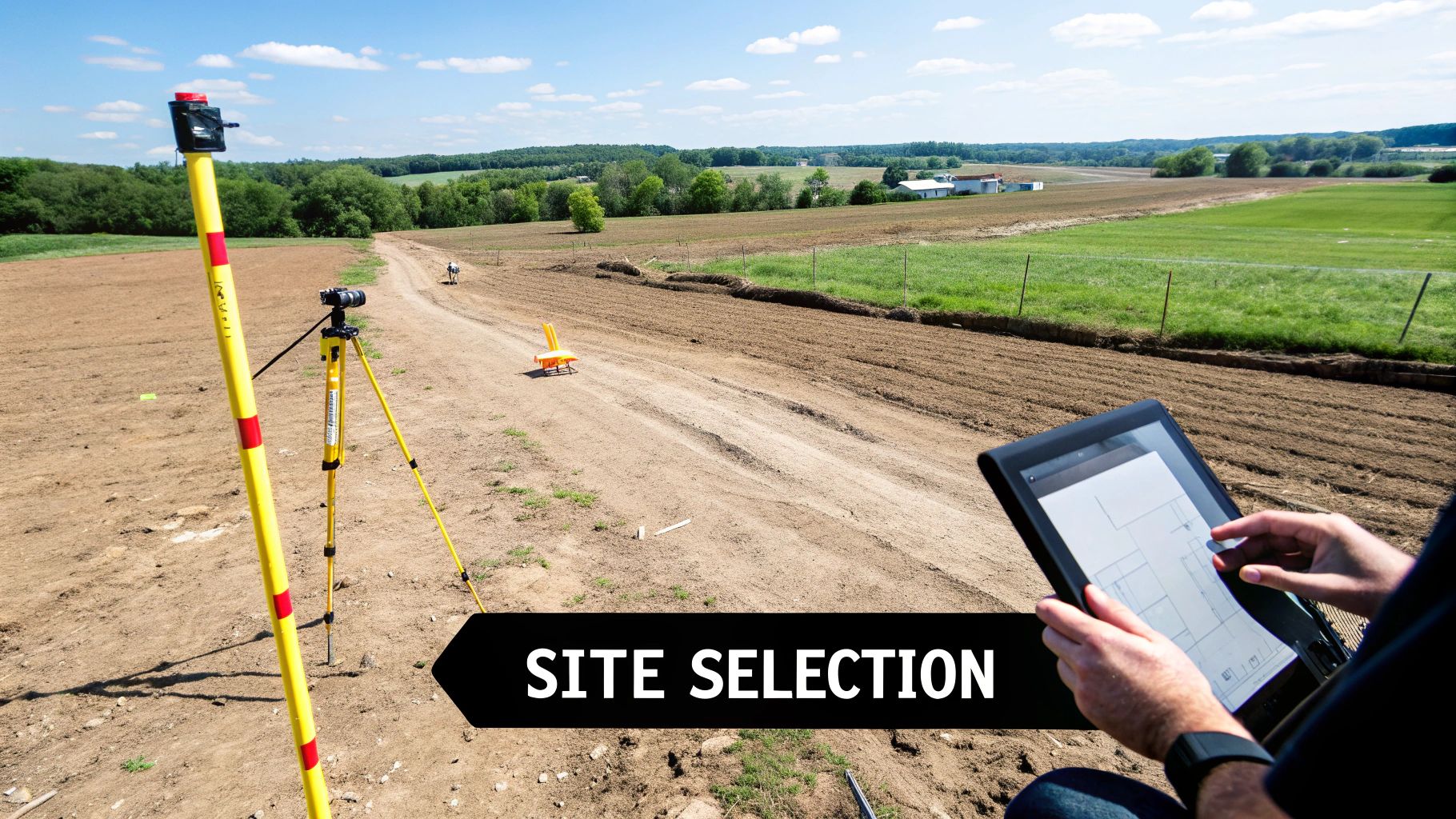
You've got the vision for your farmhouse down to the last detail, but the piece of land you choose is the true foundation of that dream. It’s so easy to get swept up by a gorgeous view or a meadow dotted with old oak trees. The thing is, the perfect plot is about so much more than what you see on the surface. The real work is digging into the nitty-gritty details that can make or break your entire project.
Skipping this critical stage can lead to significant and unexpected delays and compromises that you never intended. Imagine finding your ideal five-acre parcel, only to discover later that the soil is unsuitable for a standard septic system. Suddenly, you're looking at an extra $20,000 or more in site prep costs. This is the unglamorous but absolutely essential due diligence that protects your investment and makes sure your land can actually support your farmhouse vision.
Beyond the View: The Technical Due Diligence
Before you even think about making an offer, it’s time to get technical. These checks are non-negotiable and will reveal the true potential—and hidden costs—of any property.
Soil and Perk Tests: A soil test reveals the stability and composition of the ground, which is crucial for your foundation. A percolation (or "perk") test measures how quickly water drains, a key factor for getting a septic system approved in rural areas without city sewer.
Utility Access: You have to confirm access to essential services. Is there a municipal water hookup, or will you need to drill a well? Is electrical service already run to the property line, or will you be responsible for the thousands of dollars to have poles installed? And in today's world, don't forget to check on high-speed internet.
Surveys and Boundaries: A proper survey is indispensable. It officially marks your property lines, identifies any easements (like a utility company's right to access part of your land), and shows you the exact topography. To gain a better understanding, refer to our guide on what a foundation survey entails.
These aren't just suggestions; they're fundamental steps for building a farmhouse the right way.
Navigating Zoning and Building Restrictions
Every county and municipality has its own set of rules for construction. These local ordinances can have a significant impact on your project, dictating everything from the minimum distance to the road to the maximum size of your home.
Failing to comply with these regulations can bring your project to a standstill. For instance, some rural areas have agricultural zoning that might restrict residential building, while others have strict environmental protections for wetlands or protected habitats. It’s essential to visit the local planning and zoning office to get a clear picture of what's allowed.
Expert Insight: Always verify the zoning classification of a property yourself. Never rely solely on the information in a real estate listing—it can be outdated or just plain wrong. A quick trip to the county office can save you from a world of hurt.
New residential builds are a big driver of the construction market, which is projected to grow from $15.78 trillion in 2024 to $16.45 trillion in 2025. As the industry grows larger, regulations often become more complex.
Putting It All Together for the Right Choice
Choosing land is a balancing act between your heart and your head. The emotional pull of a beautiful property is strong, but a practical, data-driven approach is what ultimately ensures a smooth construction process.
To gain a better understanding of the complexities of site selection and approvals, a comprehensive guide to building on rural land in NSW can be an invaluable resource, offering insights that apply regardless of where you plan to build. By thoroughly vetting your potential land for these key factors, you transition from simply finding a suitable spot to securing the ideal canvas for your new farmhouse.
Bringing Your Farmhouse Vision to Life with Blueprints
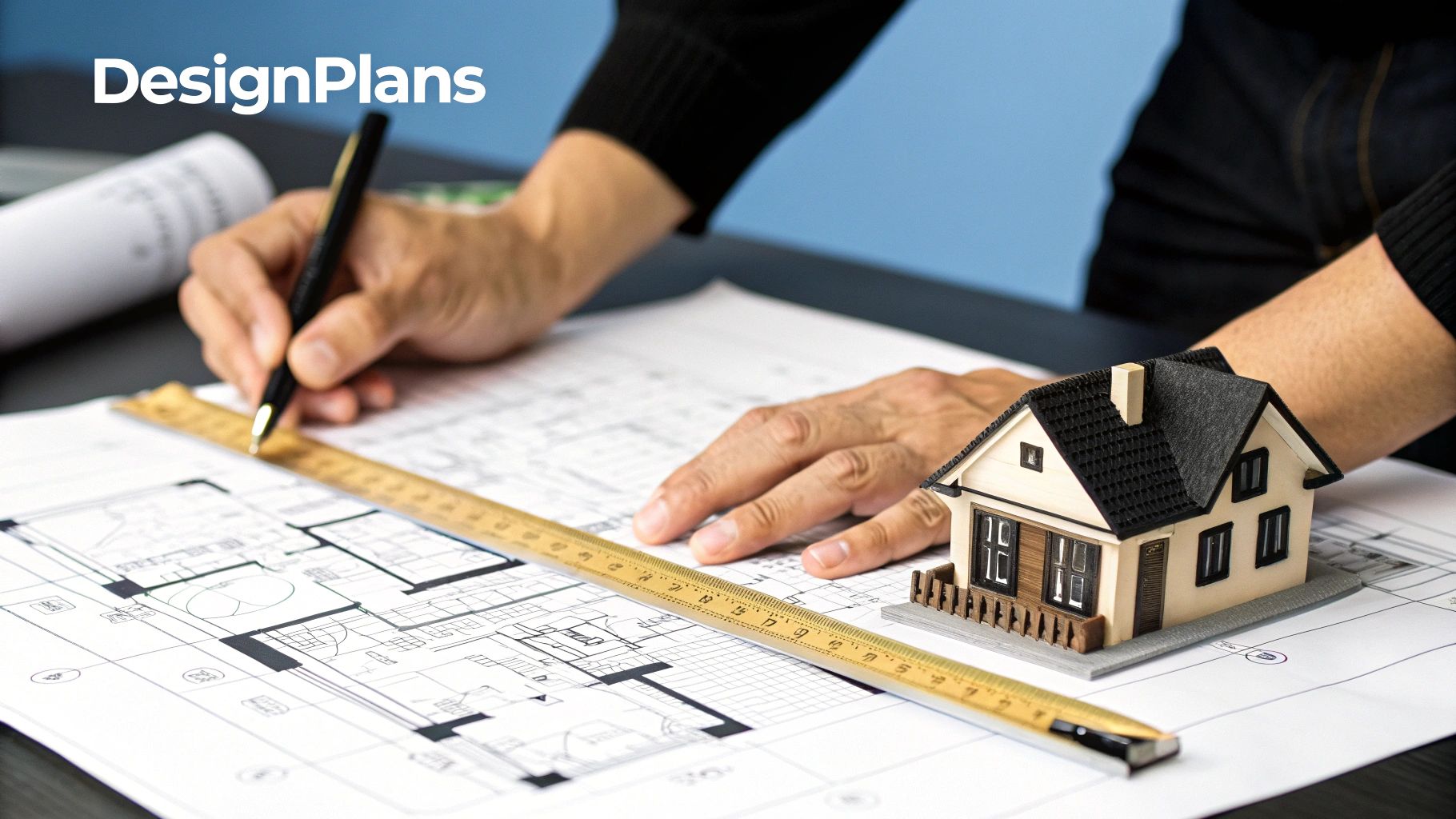
Alright, this is where the magic really starts to happen. You've got the dream, you've got the land, and now it's time to translate all those ideas swirling in your head onto paper. The blueprints are essentially the instruction manual for your future home, and making the right choice here is one of the biggest decisions you'll make.
The main crossroads you'll come to are whether to start with pre-designed stock farmhouse plans or to go all-in with an architect for a fully custom design. There’s no single right answer—it really boils down to your budget, your timeline, and just how one-of-a-kind you want your home to be.
Stock Plans Versus Custom Designs
Let's break down what each path looks like. It's a fundamental decision, so it's worth taking a moment to understand the differences.
Stock Home Plans: Think of these as proven, construction-ready blueprints you can buy off the shelf. Since the heavy lifting of the architectural design is already done, they are a fantastic and cost-effective option. You can browse hundreds of layouts to find one that’s a 90% match for what you need, and then work with a designer to tweak the last 10%.
Pros: Much friendlier on the wallet, gets you to the building stage faster, and you're getting a layout that's already been tested and proven to work.
Cons: It won't be a completely unique home, and modifications, while possible, can be limited or add unexpected costs.
Custom Architectural Designs: This is the bespoke route. You hire an architect to create a home designed specifically for you, your family, and your exact piece of land. It’s the way to go if you have a very specific vision, a tricky lot with unique slopes or views, or special accessibility requirements. An architect will spend months with you, turning your lifestyle into a home that's truly yours.
Pros: You get a 100% unique design tailored to your every want and need.
Cons: This is a significant investment, often accounting for 8-15% of the total construction budget, and the design phase itself can be lengthy.
Key Insight: A lot of people find a great middle ground. They start with a stock plan they love and then hire a local designer (or the original firm) to make semi-custom changes. This gives you that personalized feel without the full price tag and timeline of a ground-up custom design.
Decoding the Language of Blueprints
Once you have a set of plans in your hands, you need to know what you're looking at. Blueprints are far more than just a floor plan—they're the complete guide for your builder. Getting comfortable with the basics is crucial to making sure what gets built is what you actually envisioned. If you're new to this, our guide on what a blueprint is and how to read one is a great place to start.
When you're reviewing any set of plans, here are a few things I always tell people to focus on:
Room Flow and Traffic Patterns: Mentally walk through the house. Does the path from the mudroom to the kitchen make sense for bringing in groceries? Is the laundry room conveniently located, or is it a bit of a trek?
Natural Light and Window Placement: Consider the house's orientation on your property. Where will the sun be in the morning versus the afternoon? Are there enough windows in the living areas to give you that bright, airy farmhouse feel?
Storage Solutions: This is the one thing everyone wishes they had more of. Seriously, look for closets, pantry space, and any nook you can find for storage in the mudroom, garage, or attic. You can never have too much.
Future-Proofing: Think five, ten, even twenty years down the road. Will this layout still work if your family grows, shrinks, or if you have an elderly parent move in with you?
Integrating Signature Farmhouse Elements
Whether you go stock or custom, you'll want to make sure the plan has those architectural details that scream "farmhouse." These aren't just for aesthetics; they serve a practical function that aligns with how you want to live.
Keep an eye out for these classic features:
Gabled Roofs: That simple, triangular roofline is the absolute hallmark of farmhouse design.
Board-and-Batten Siding: The vertical siding adds that perfect touch of texture and rustic charm.
A Welcoming Porch: It doesn't have to be a full wraparound (though those are amazing!). Even a simple, deep front porch is essential for connecting the home to the land around it.
Open-Concept Kitchen and Living: The heart of any modern farmhouse is a big, open space for everyone to gather. Ensure the kitchen features a spacious island that seamlessly integrates with the main living area.
Mastering Your Construction Budget and Financing
Let's be honest, a well-managed budget is just as crucial as the concrete foundation of your new farmhouse. It’s the roadmap that turns a massive, intimidating number into a series of clear, manageable steps. This is the part of the journey where a clear head and a detailed spreadsheet become your best friends.
We’ll break down all the costs you can expect, from buying the land and pulling permits to that final coat of paint and the very first tree you plant in the yard. With a solid plan, you can tackle the financial side of your build with confidence, making sure your dream home doesn’t become a financial nightmare.
Deconstructing Your Farmhouse Build Costs
The key to a realistic budget is understanding that it's never just one lump sum. Think of it as a collection of dozens of smaller expenses, each needing its own line item and careful consideration. Grouping these into categories makes the whole process feel much more approachable.
A typical custom build budget breaks down into a few major phases:
Soft Costs (Approx. 10-15%): These are the expenses that happen before a single shovel hits the dirt. This bucket includes items such as architectural and engineering fees, land surveys, soil tests, and all the various building permits required by your local town.
Hard Costs (Approx. 60-70%): Here's the biggest piece of the pie—the actual construction. This covers everything from site preparation, foundation, and framing to roofing, siding, windows, and all the internal components of the house, including plumbing, electrical, and HVAC.
Finishes (Approx. 15-25%): This is where you get to make the house feel like your home. We're talking flooring, cabinets, countertops, light fixtures, paint, and appliances. Be careful here, though—this is where budgets can easily get out of hand, as the price range for finishes is absolutely enormous.
Landscaping and Exterior Work: Don’t forget about the outside! Budget for grading the property, pouring driveways and walkways, installing a septic system if needed, and of course, the landscaping that truly completes that classic farmhouse look.
On top of the core construction expenses, it's vital to factor in the other costs of acquiring the property. Ensure you understand the conveyancing costs involved in finalizing your land purchase.
To give you a clearer picture, here's a sample breakdown of where the money typically goes. Keep in mind, these percentages can shift based on your location, the complexity of your design, and the level of finishes you choose.
Sample Farmhouse Construction Budget Breakdown
An estimated percentage-based breakdown of costs for a typical custom farmhouse build. Actual percentages will vary by location and project scope.
Cost Category | Estimated Percentage of Total Budget |
|---|---|
Foundation & Site Prep | 10% - 15% |
Framing & Structure | 15% - 20% |
Exterior Finishes (Roof, Siding, Windows) | 15% - 20% |
Major Systems (Plumbing, Electrical, HVAC) | 10% - 15% |
Interior Finishes (Drywall, Flooring, Paint) | 15% - 20% |
Kitchen & Bathrooms | 10% - 15% |
Landscaping, Driveway, & Exterior | 5% - 10% |
Permits, Fees, & Soft Costs | 5% - 10% |
Seeing it laid out like this helps you anticipate where your funds will be allocated throughout the build.
The Non-Negotiable Contingency Fund
If I can give you one golden rule for construction budgeting, it's this: always have a contingency fund. This isn't an optional "nice-to-have" slush fund; it's a mandatory part of your budget that, I promise you, will almost certainly get used.
Expert Tip: Plan for a contingency fund of at least 10-15% of your total construction cost. For a $500,000 build, that’s an extra $50,000 to $75,000 set aside. This is your safety net for the inevitable surprises, like hitting a massive boulder during excavation or dealing with a sudden spike in lumber prices.
Without this buffer, a single unforeseen issue can force you to make painful compromises on your kitchen cabinets or, in a worst-case scenario, bring the project to a grinding halt.
Securing a Construction Loan
Unless you're paying in cash, you’ll need to get a construction loan to finance your farmhouse build. This kind of loan works differently than a standard mortgage. Instead of getting all the money at once, the funds are paid out in stages, or draws, as key construction milestones are completed.
Lenders will want to see a detailed plan before approving your loan. You'll need to have your ducks in a row and provide:
A Detailed Budget: They need to see every single line item, from the concrete for the foundation right down to the doorknobs.
Complete Blueprints: Your full set of architectural plans must be finalized and approved.
A Signed Contract with a Builder: You’ll need a licensed and insured general contractor officially on board.
As work progresses, the bank will send an inspector to the site to verify that each major phase (like the foundation, framing, or drywall) is complete before they release the next draw payment to your builder. It’s a system that protects both you and the lender by making sure the money is being used as intended.
It’s also crucial to remember that where you build has a huge impact on your final cost. Construction costs can vary wildly from one region to another. For instance, cities like Geneva and London consistently rank among the most expensive places to build due to high labor and material costs. You can get a sense of how global trends affect local pricing by reviewing the full International Construction Costs report for 2025. This global perspective helps you understand the broader economic forces that might be influencing your local builder's quotes.
Assembling Your Build Team and Managing the Project
Your farmhouse vision will only ever be as good as the team you hire to bring it to life. This isn’t just about finding people who are good with a hammer and nails; it’s about building a real partnership based on trust, clear communication, and a shared goal for your home.
The right team makes the whole process feel collaborative and exciting. The wrong one? It can turn your dream into a constant source of stress.
Choosing Your General Contractor and Key Players
Selecting your general contractor (GC) is easily the most important hiring decision you'll make. This is the person who will be your day-to-day point person, the one responsible for juggling everything from pulling permits to managing dozens of subcontractors. A great GC doesn't just build a house—they orchestrate a complex project with countless moving parts.
Before signing any contracts, you absolutely have to do your homework. Start by asking for recommendations from local architects, building supply stores, and even friends who have recently built a home. Your goal should be to interview at least three reputable contractors to gain a sense of their communication style, work process, and pricing.
During these interviews, you need to go beyond just the bottom-line cost. Really dig into their experience and how they operate.
Ask for a Portfolio and References: Look for examples of homes similar in style and scope to your farmhouse. Most importantly, ask to speak with their last three clients. A confident, quality builder will have no problem providing these contacts.
Verify Licenses and Insurance: This is completely non-negotiable. You must confirm they have a current contractor's license and carry both liability insurance and workers' compensation. This is what protects you from financial disaster if an accident happens on your property.
Discuss Their Subcontractor Relationships: A well-established GC has a trusted network of plumbers, electricians, and framers they work with all the time. That stability usually translates to better quality work and a more reliable schedule.
Red Flag Warning: Be very wary of a contractor whose bid is dramatically lower than the others. While it's tempting, this often signals that they've missed something important, are using subpar materials, or are cutting corners on insurance or labor. Quality work has a fair price.
Once you’ve vetted your top candidates, it's time to review their contracts in detail. Ensure the contract clearly outlines the scope of work, a detailed payment schedule (often referred to as a draw schedule), a projected timeline with key milestones, and a clear process for handling any changes. Never sign a contract you don't fully understand.
The Homeowner's Role in Project Management
Hiring a great team is the first big step, but your job isn't done. While the GC handles the daily grind, you are the ultimate project manager for your own dream. Your role is to keep communication flowing, make timely decisions, and stay informed without getting in the way of the professionals you’ve hired.
A successful project hinges on clear and consistent communication. Establish a regular check-in schedule with your GC from the outset. This could be a weekly phone call, an on-site meeting every Friday, or a shared digital folder. This rhythm keeps everyone on the same page and stops small questions from snowballing into major problems.
Making Site Visits Productive
Visiting your construction site is one of the most exciting parts of building a farmhouse. But to make these visits count, you need to go in with a purpose. Instead of just wandering around, try to time your visits to coincide with major milestones.
After the Foundation is Poured: This is your first chance to walk the space and get a true feel for the home's footprint and layout.
Once Framing is Complete: Now you can really visualize room sizes and window placements. This is the perfect time to confirm the flow of the house feels right before the plumbing and electrical work starts.
During the Rough-In Stage: Walk through with your builder and electrician to confirm the placement of every single outlet, light switch, and fixture. It’s a whole lot easier to move a junction box now than it is after the drywall is up.
These check-ins help you catch potential issues early and confirm that what you saw on the blueprints is translating correctly into the real world. By assembling a skilled team and staying actively engaged, you pave the way for a smoother build and ensure your finished home is everything you envisioned.
Answering Your Farmhouse Build Questions
Building a custom home is a huge undertaking, and it's only natural for questions to pop up along the way. Even with the best builder on your team, you'll want to have a handle on the details. Let's walk through some of the most common questions we hear from folks dreaming of their own farmhouse.
How Long Does It Take to Build a Farmhouse?
This is usually the first thing people ask, and for good reason. While every project has its own unique rhythm, a solid ballpark estimate for a custom farmhouse build is somewhere between 10 to 16 months. That's from the day the excavator shows up to the moment you're turning the key in the front door.
Of course, that timeline can stretch or shrink based on a few key things. The complexity of your blueprints, how quickly your local building department approves permits, surprise weather delays, and your builder’s own schedule all have a say in the final timeline.
A typical build unfolds in stages:
Site Prep & Foundation: This usually takes about 1-2 months, provided you don't run into any major surprises during excavation.
Framing: This is when your house really starts to look like a house. Expect this phase to last another 1-2 months.
Exterior & Rough-Ins: Your roof, siding, and windows go on, while crews for plumbing, electrical, and HVAC run all the necessary lines inside. This takes about 2-3 months.
Interior Finishes: This is the final stretch where all the details come to life—drywall, paint, flooring, cabinets, and fixtures. It's often the longest phase, taking anywhere from 3-5 months.
Make sure you get a detailed schedule from your builder upfront. And here’s a pro tip: mentally add a little buffer for those small, unexpected delays. They're just part of the process.
What Are the Most Common Unexpected Costs?
Even the most buttoned-up budget can face a few surprises. More often than not, the biggest and most expensive curveballs come from the land itself. For instance, hitting a massive patch of rock during excavation can easily add thousands of dollars to your site preparation costs.
Other common culprits include the need for a more advanced septic system due to poor soil drainage or the requirement for extensive grading to ensure water runs away from your foundation. The fluctuating price of materials, especially big-ticket items like lumber and windows, can also throw a wrench in the numbers.
And then there are the changes you decide to make mid-build. These are called change orders, and they can get expensive fast, mostly because they involve re-doing labor that’s already been completed. This is exactly why the 10-15% contingency fund we discussed earlier isn't just a nice-to-have—it’s absolutely essential.
Modern Farmhouse vs. Traditional Farmhouse: What's the Difference?
The term "farmhouse" can evoke a variety of images. The real difference boils down to whether you lean more traditional or more modern in your interpretation of the style.
A traditional farmhouse is all about function, warmth, and a kind of cozy simplicity. You'll see lots of reclaimed wood beams, wide-plank floors, and, of course, a big, welcoming porch meant for genuine relaxation. The layout feels practical, stemming from the home's working roots.
The modern farmhouse, on the other hand, borrows those classic, rustic ingredients but gives them a contemporary twist.
Design Insight: Think of the modern farmhouse as a beautiful mashup of old and new. It keeps the classic gabled roof and board-and-batten siding but pairs them with clean lines, a high-contrast black-and-white color scheme, and huge windows that let sunlight pour in.
Inside, you’ll find open-concept layouts, sleek finishes like quartz countertops, and modern stainless steel appliances. It’s a stylish blend that feels both timeless and perfectly in step with how we live today.
Can I Be My Own General Contractor to Save Money?
It's definitely tempting to think about being your own general contractor (GC), especially when you learn their fee is typically 10-20% of the total project cost. While you can save that money, stepping into the GC role is a massive commitment and not something to be taken lightly.
Being your own GC is a full-time job, and it demands real expertise. You are suddenly responsible for everything:
Hiring, scheduling, and paying every single subcontractor—from the concrete crew to the final cleaning crew.
Ordering all materials and making sure they show up to the job site on time and in the right order.
Coordinating every necessary inspection with your local building officials.
Ensuring every last detail of the build is up to code.
Without a deep well of construction knowledge, the risk of making expensive mistakes that blow your budget and cause major delays is incredibly high. For most people, the peace of mind, industry connections, and professional oversight a good GC brings to the table is worth every penny.
At RBA Home Plans, we provide award-winning architectural blueprints to help you turn your farmhouse dream into a reality. Our online catalog features a diverse selection of construction-ready designs that offer clarity, flexibility, and lasting value. Find your perfect farmhouse plan today.


Comments