
Small Modern Farmhouse Plans Your Ultimate Guide
Updated: Dec 28, 2025
Small modern farmhouse plans are the perfect marriage of rustic charm and clean, contemporary design, usually landing somewhere between 1,000 and 2,000 square feet. This incredibly popular style gives you that cozy, welcoming vibe of a classic farmhouse but in a smart, affordable package designed for how we live today.
Why Small Modern Farmhouse Plans Are So Popular
The love for small modern farmhouse plans is more than just a fleeting trend—it’s about a deliberate shift toward a more intentional way of living. More and more, homeowners are realizing they don't want wasted space; they want financial freedom and a home that truly works for them. These plans take the nostalgic comfort of traditional farmhouses—like those classic gabled roofs and inviting front porches—and infuse them with modern practicality.
This blend hits on several key things today's homebuyers are looking for:
Affordability: A smaller footprint simply costs less to build. You're using fewer materials, which makes the dream of homeownership much more attainable.
Efficiency: Less square footage means lower utility bills month after month. It also means less time spent cleaning and maintaining your home.
Smart Design: Modern layouts are all about open-concept living. Every square inch is put to work, making the home feel spacious, connected, and perfect for family life.
Timeless Style: By mixing rustic materials like natural wood and metal with clean lines and neutral colors, you get a look that never goes out of style.
Decoding the 'Small' and 'Modern' Elements
So, what exactly makes a plan "small" and "modern"? It's key to understand both parts. "Small" generally means a home under 2,000 square feet. This isn't about being cramped; it’s about thoughtful design that encourages you to live without clutter and excess.
The "modern" part is all about function. It’s not the cold, sterile minimalism you might be picturing. Instead, it’s about incorporating features that support a contemporary lifestyle.
A modern farmhouse isn't just about shiplap and barn doors. It's about creating a highly functional, light-filled space that feels both timeless and personal, proving that great design doesn't require a massive footprint.
Think about large windows that flood the rooms with natural light, making even compact spaces feel open and airy. Picture an open-concept kitchen that flows right into the living area, creating a natural hub for everyone to gather. These are the details that let a small home live large.
This chart shows how building smaller can lead to some surprising cost savings and major long-term energy efficiency.As you can see, while a smaller home might have a slightly higher cost per square foot because of fixed expenses, the long-term energy savings are substantial.
Key Architectural Features You Will Love
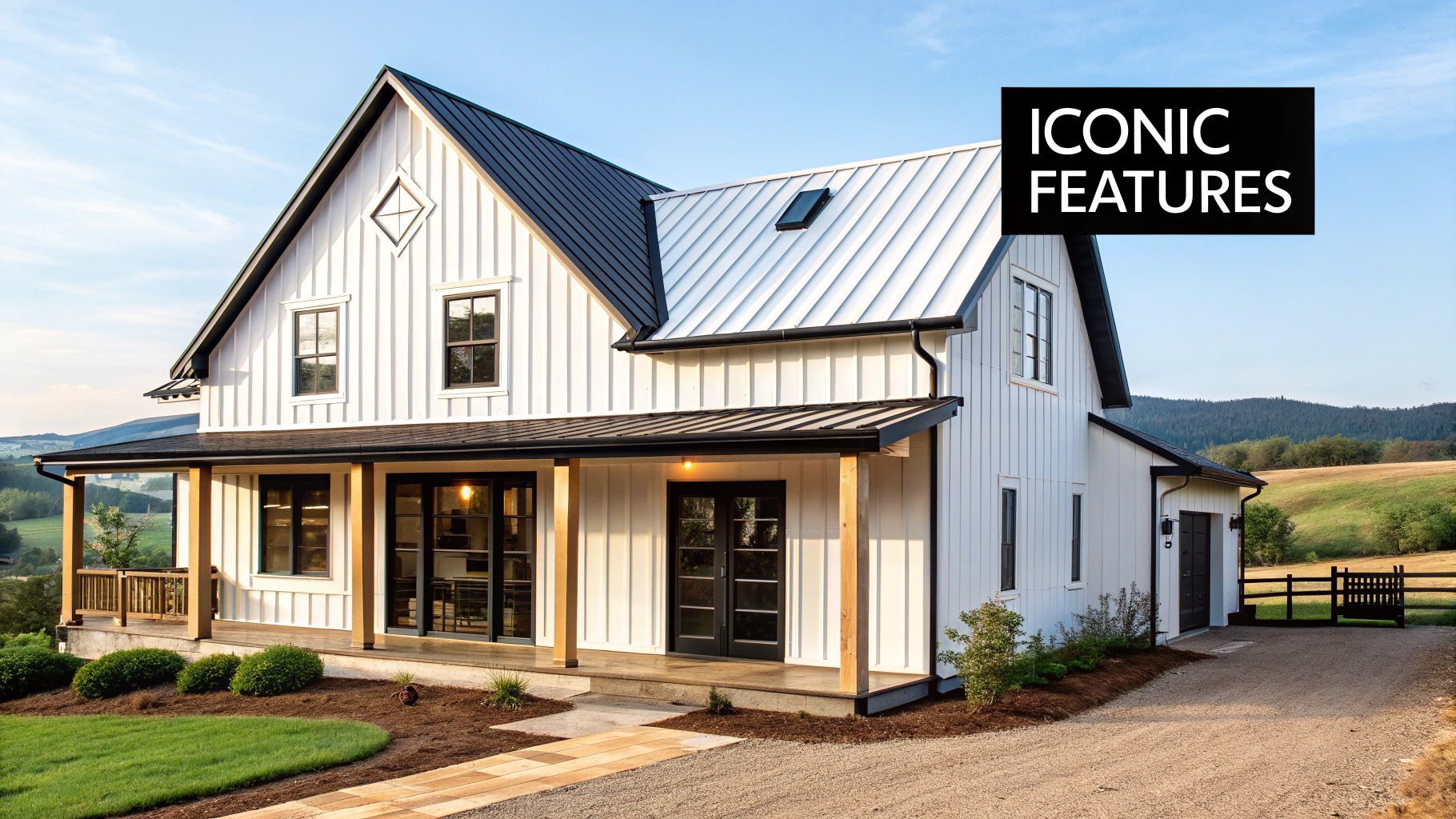
The charm of a small modern farmhouse doesn’t just happen by accident. It's born from a specific set of architectural details working together to blend rustic comfort with clean, contemporary lines. Think of it like a trusted family recipe—every single ingredient plays a crucial part in creating that signature look and feel.
Let's pull back the curtain on the visual playbook for these homes. We'll walk through the essential exterior elements that create that undeniable curb appeal and the interior touches that make the space feel both grand and cozy at the same time. Getting a handle on these features will help you pinpoint what you love and what to prioritize in your own small modern farmhouse plans.
The Unmistakable Exterior Profile
The first impression is everything, and modern farmhouses have a silhouette that’s both classic and striking. These homes borrow a lot from traditional agricultural buildings but give them a fresh spin for today’s world.
When these elements come together, they create a profile that feels grounded, authentic, and effortlessly stylish. It’s no surprise this style continues to capture the hearts of homeowners. In fact, modern farmhouse plans are a major force in the market.
Recent data shows they account for roughly 32% of total house plan sales in 2024, climbing from 30% last year. Their lasting popularity is a testament to that unique mix of rustic appeal and modern flexibility, with most smaller plans landing between 1,500 and 2,000 square feet.
Here are the key exterior features that define the look:
Gabled Roofs: That simple, triangular roof shape is a direct nod to traditional farmhouse design. In modern takes, the rooflines are often steeper with clean, minimal eaves for a sharper, more defined look.
Board and Batten Siding: This classic siding, with its wide vertical boards and narrow strips (battens), adds incredible texture and strong vertical lines. It's often painted a crisp white or a moody, dark color to create a bold contrast.
Metal Roofing: A durable standing-seam metal roof is a common sight, often used as an accent over porches or dormers. The clean lines and industrial vibe of metal are the perfect counterpoint to rustic siding.
Large Covered Porches: The front porch is so much more than an entryway; it’s an outdoor living room. It's a welcoming feature that invites relaxation, typically framed by simple, squared-off columns instead of ornate ones.
Inviting and Airy Interior Elements
Step inside a well-designed small modern farmhouse, and the first thing you'll notice is how surprisingly open and bright it feels. The main goal here is to maximize the sense of space within a compact footprint, using a few architectural tricks to draw your eyes upward and outward.
These interior features work in harmony to create a cohesive and welcoming atmosphere. They add just the right amount of character and warmth, preventing the clean, modern lines from feeling cold or sterile. For more great examples, you can find plenty of inspiration in our guide on 10 modern farmhouse design ideas to inspire your 2025 home.
The magic of a small modern farmhouse interior lies in its ability to feel expansive. Vaulted ceilings and exposed beams create vertical volume, making a 1,500 square foot home feel as open as one twice its size.
Inside, you’ll almost always find a thoughtful mix of materials and textures. Natural wood is essential for adding warmth and connecting the home to its rustic roots.
Here’s what you'll commonly find inside:
Vaulted Ceilings and Exposed Beams: Nothing opens up a small space like a high ceiling. Vaulted ceilings in the main living area create an airy, cathedral-like effect. Adding exposed wooden beams brings in that rustic character and visual interest.
Shiplap and Paneling: While it’s been everywhere, shiplap is still a go-to for adding texture to walls. When used strategically—say, on an accent wall or a ceiling—it adds a layer of handcrafted charm.
Large Windows: Big, beautiful windows are non-negotiable. Often framed in black with a simple grid pattern, they flood the interior with natural light and create a strong connection to the outdoors.
Natural Wood Accents: From wide-plank wood floors to a reclaimed wood mantelpiece or butcher block countertops, natural wood is crucial. It provides a warm, organic contrast to the often-neutral color palette of whites, grays, and blacks.
Essential vs Optional Modern Farmhouse Features
When you're planning your build, it helps to know which features are core to the modern farmhouse identity and which are popular but optional add-ons. This table breaks it down to help you prioritize based on your budget and style goals.
Feature | Type | Description & Impact |
|---|---|---|
Gabled Roof | Essential | The classic triangular roofline is the foundational shape of the farmhouse silhouette. Without it, the home loses its most recognizable feature. |
Board & Batten Siding | Essential | This vertical siding provides the signature texture and visual rhythm of the style. It's a must-have for achieving an authentic look. |
Large Front Porch | Essential | More than an aesthetic choice, the porch is a functional space that embodies the welcoming, communal spirit of farmhouse living. |
Open-Concept Living | Essential | A combined kitchen, living, and dining area is central to the modern feel, creating an airy and connected interior perfect for today's lifestyle. |
Standing Seam Metal Roof | Optional | While very popular, a metal roof can be a budget-heavy item. It adds a sharp, modern edge but can be swapped for asphalt shingles. |
Exposed Beams | Optional | These add incredible rustic character but aren't structurally necessary in most modern builds. They are a decorative element that can be added. |
Shiplap Interior Walls | Optional | A great way to add texture, but drywall is a perfectly acceptable and more budget-friendly alternative for achieving the clean, bright interior. |
Barn Doors | Optional | A trendy element that reinforces the farmhouse theme. However, standard doors are more practical for sound and privacy in many applications. |
Understanding these distinctions allows you to focus your budget on the elements that truly define the style while making smart choices about where you can save.
How to Maximize Space with Smart Layouts
A smaller footprint isn’t a sentence for cramped living. Far from it. Think of it as an invitation to get creative and design a home that lives much larger than its square footage suggests. This is where smart layouts in small modern farmhouse plans really shine, transforming compact spaces into homes that are both functional and incredibly comfortable.
The trick is to move beyond just saying "open concept" and really dig into the strategies that create both flow and purpose. It’s all about making every square inch work for you. A well-designed small home just feels right—breezy, intuitive, and effortlessly organized.
Prioritize a Main Floor Master Suite
One of the smartest layout decisions you can make is putting the master suite on the main floor. For a few key reasons, this design choice is a total game-changer, mixing everyday convenience with long-term practicality.
For starters, it carves out a private retreat for the homeowners, nicely separated from secondary bedrooms that might be upstairs. This split-bedroom layout is perfect for families with older kids or when you have guests over, giving everyone a bit of their own space.
Even more importantly, a main-floor master means your home can adapt with you through every stage of life. By removing the daily need to climb stairs, it’s a forward-thinking choice that supports aging-in-place.
Unlock Hidden Storage Potential
Clutter is the natural enemy of a small home. The best layouts weave storage in so seamlessly you barely notice it’s there—until you need it. This is all about finding and making the most of those often-overlooked spaces.
Take the area under the stairs. Instead of letting it become a dark, forgotten closet, why not turn it into a cozy reading nook with built-in bookshelves? It could also become a compact home office or even a clever den for a pet.
A thoughtfully designed mudroom is a small home's secret weapon against chaos. Built-in lockers, a bench for removing shoes, and designated bins for bags and gear can stop clutter right at the door.
The entryway is another critical zone. A dedicated mudroom or drop zone, no matter how small, acts as an essential buffer between the mess of the outdoors and your clean, main living area.
Create Zones in an Open Layout
An open floor plan is a hallmark of modern design, but a huge, undefined space can feel a bit cold and chaotic. The secret is to create distinct "zones" for different activities without actually putting up walls.
This is where your furniture arrangement becomes your most powerful tool. A large area rug can anchor the living room furniture, visually separating it from the dining space. Something as simple as a strategically placed sofa or console table can act as a subtle divider, creating the feel of separate rooms.
Here are a few zoning strategies that work wonders:
Area Rugs: Use different (but complementary) rugs to define the living room, dining area, and even the entryway.
Furniture Placement: Arrange your sofa so its back is to the dining table, creating a clear visual break between the two zones.
Lighting: Hang a statement chandelier over your dining table and use more focused task lighting, like floor lamps, in the living area to give each space its own mood.
This approach gives you that airy, connected feeling of an open layout while making sure every part of the space has a clear job to do. You can see more great examples in our guide to the top small home layout ideas to maximize space in 2025.
The demand for these kinds of thoughtfully designed homes is clearly on the rise. We've seen significant growth in the market for house plans with smaller footprints, with plans between 1,000 and 1,499 square feet making up about 23% of total sales in 2024. This trend shows a real desire for affordable, stylish homes that don't skimp on modern features, with small modern farmhouse layouts leading the charge.
By embracing these smart layout strategies, you can ensure your small modern farmhouse is not only beautiful but also incredibly efficient, comfortable, and a perfect fit for your lifestyle.
Budgeting for Your Farmhouse Build Realistically
Let’s talk numbers. Planning the financial side of your dream home is arguably the most critical step you'll take. A solid budget isn't just a spreadsheet; it's the foundation that turns your vision for small modern farmhouse plans from a daydream into a real, actionable project. It’s about making smart choices every step of the way, creating a home that’s not only beautiful but also a sound financial investment for your future.
The first step is simply understanding where all the money goes. The total cost to build a house is a puzzle with many different pieces, and it's far more than just the price of the blueprint. You've got to think about the land, site prep, foundation, materials, labor, permits, and all the finishes that make it feel like home. Each of these can swing your bottom line in a big way.
Breaking Down the Major Costs
To put together a budget that holds up in the real world, you need a clear-eyed view of the entire financial landscape. We can group most of the expenses into a few key areas. To make sure you're not missing anything, a detailed new home construction checklist can be a lifesaver, guiding you through every stage from breaking ground to the final walkthrough.
Here are the primary cost centers you'll be looking at:
Land and Site Work: This is everything from buying the lot to getting it ready for construction—clearing trees, grading the soil, and hooking up to utilities like water, sewer, and power.
Foundation and Framing: These are the bones of your house. Costs here will vary based on your foundation type (slab, crawlspace, or a full basement) and how complex the home's structure is.
Exterior Finishes: This bucket covers everything that protects your home from the elements—roofing, siding, windows, and doors. The choices you make here have a huge impact on curb appeal and long-term maintenance.
Interior Systems and Finishes: This is a big one. It includes all your plumbing, electrical, and HVAC systems, plus drywall, paint, flooring, cabinets, countertops, and light fixtures.
Labor Costs: This is a substantial slice of the pie, often accounting for 30-50% of the total project cost. The exact percentage can vary quite a bit depending on your region and the complexity of the build.
The Financial Advantage of Building Small
If you want the single most effective way to keep your construction budget under control, choose a smaller plan. It’s simple logic: less square footage means fewer materials to buy, less labor needed to put it all together, and a smaller foundation to pour. This creates a ripple effect of savings across nearly every part of your budget. For a deeper dive into these numbers, check out our guide on decoding the cost to build a new home.
And the savings don't stop when the last nail is hammered in. A smaller home keeps paying you back for years with lower utility bills for heating and cooling, reduced property taxes in many areas, and just plain lower maintenance costs.
The true value of a small modern farmhouse plan isn't just a lower upfront building cost—it's the lifelong savings and financial freedom that come from living more efficiently.
Smart Ways to Control Your Budget
Beyond just building smaller, there are strategic moves you can make during the design phase to rein in costs without sacrificing that high-end look you’re after. These tricks usually involve simplifying the home’s structure, which cuts down on both material and labor costs.
Think about these cost-effective strategies:
Simplify the Roofline: A classic, simple gabled roof is much more affordable to build and shingle than a complex design full of hips, valleys, and dormers.
Stick to a Rectangular Footprint: A straightforward rectangular or square foundation is cheaper to pour and frame than a design with a lot of jogs and corners.
Choose Standard Window Sizes: Custom-sized windows are a notorious budget-buster. Sticking with standard, off-the-shelf sizes can save you thousands without giving up all that wonderful natural light.
Plan for Phased Finishes: If your budget is tight right now, plan to finish certain spaces later. An unfinished basement or a bonus room over the garage can be completed down the road when your finances allow.
By approaching your budget with a clear strategy, you can confidently build a stunning small modern farmhouse that’s both a joy to live in and a decision you can feel good about financially.
How to Choose and Customize Your Perfect Plan
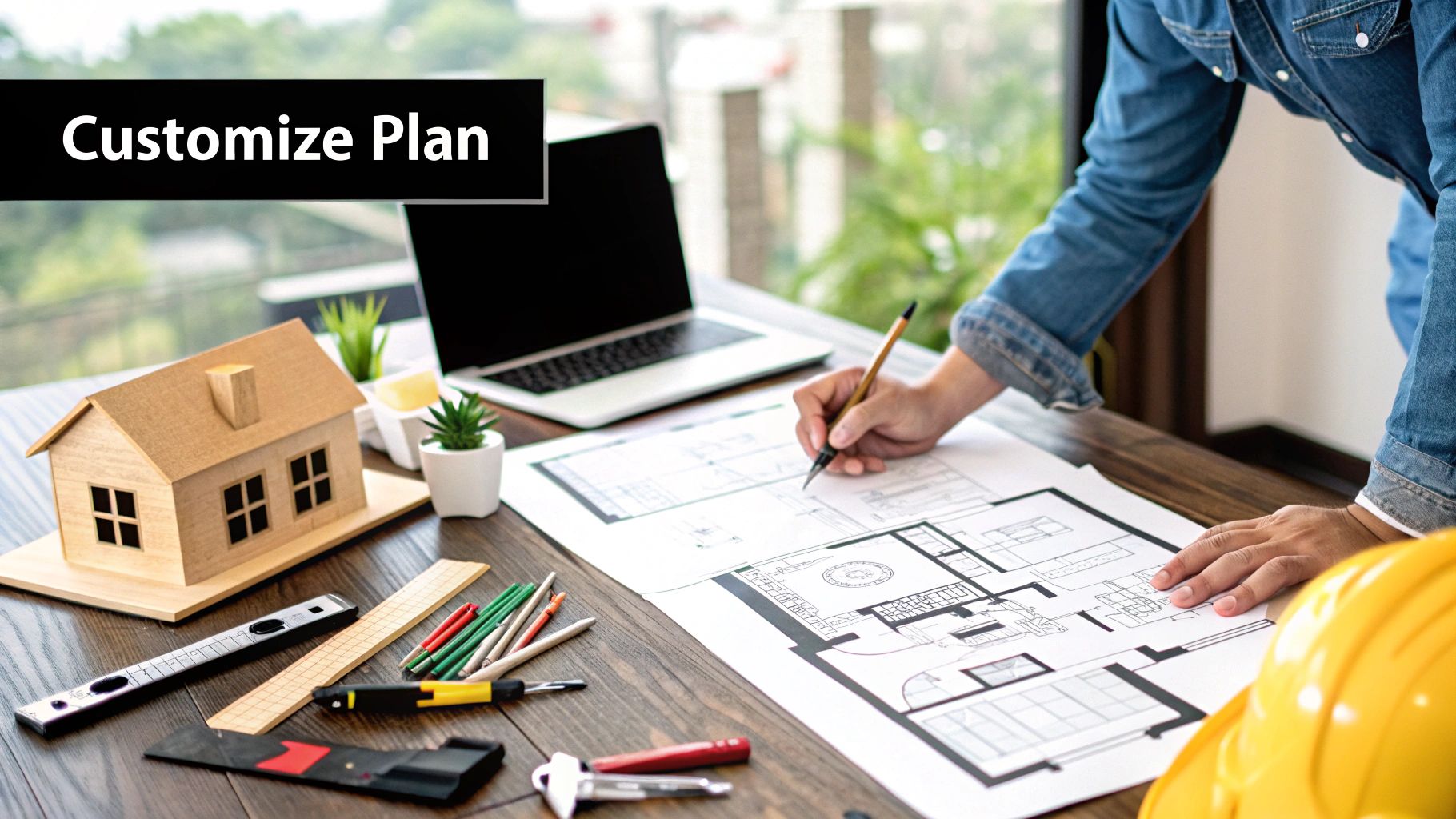
Think of choosing a stock house plan like finding the perfect recipe. It's a fantastic starting point, but the real magic happens when you start adding your own ingredients. You're not looking for a plan that's 100% perfect right off the bat. Instead, the goal is to find a layout with great bones—one you can adapt to fit how your family really lives.
This process is all about turning a great blueprint into your ideal home. But before you can start tweaking a design, you need to speak the language. Getting comfortable with floor plans and elevations is the first step. It's how you'll visualize the space and spot opportunities for changes. To get your footing, it's worth learning how to read construction blueprints like a pro.
Evaluating Plans Like a Pro
Once you know what you're looking at, you can start reviewing your options with a more critical eye. You're trying to find that sweet spot where a plan aligns with your daily routines, the unique quirks of your property, and your vision for the future. A design might look stunning on paper, but if it doesn't work for your family, it just isn't the right fit.
Use this checklist to help you systematically look through potential small modern farmhouse plans:
Lifestyle and Flow: Does the layout make daily life easier? Trace the path you'd take bringing in groceries, from the garage to the kitchen. Where's the laundry room in relation to the bedrooms? Does the open-concept area feel right for how you like to host friends and family?
Lot Orientation: How will the house actually sit on your land? This is huge. You want to place windows to capture the best views and maximize natural light, all while keeping privacy in mind.
Family Needs: Is there enough space for everyone? Tally up the bedrooms and bathrooms you need today and a few years from now. Do you need a dedicated home office, a kids' playroom, or another flex space?
Future Growth: Can the home grow with you? Keep an eye out for plans that include unfinished bonus rooms or basements. These are often the most cost-effective ways to add square footage down the line when your needs change.
Understanding Plan Customizations
The great news is that almost any stock plan can be modified. But not all changes are created equal. Some tweaks are simple and affordable, while others can be surprisingly complex and expensive, sometimes requiring a major structural re-engineering effort.
Knowing the difference is what keeps your customization dreams from turning into a budget nightmare.
Customizing a stock plan offers the best of both worlds. You get a professionally designed foundation at a fraction of the cost of a fully custom home, with the flexibility to fine-tune the details to your exact specifications.
Common and Cost-Effective Changes
These are the kinds of adjustments a designer or builder can usually handle without much fuss. They focus on interior, non-load-bearing elements and won't drastically inflate your construction costs.
Moving or getting rid of interior walls that aren't holding anything up.
Shuffling the kitchen or bathroom layouts, like changing the cabinet configuration.
Switching out window and door styles or nudging their placement a bit.
Flipping the entire floor plan to better suit your lot's orientation.
Major and More Expensive Modifications
Now we're getting into more involved territory. These changes often mean an architect or engineer has to get involved to redraw significant parts of the plan, which adds both time and money to the project.
Adding a Basement: If the plan was designed for a slab or crawlspace, digging out for a full basement means a complete foundation redesign.
Changing the Exterior Footprint: Want to make the house just a few feet wider? That decision impacts the foundation, framing, and roof structure—it's a domino effect.
Altering Rooflines: Changing the pitch of the roof or adding dormers is a major structural shift that affects the whole house.
Relocating the Staircase: Stairs are a core structural element. Moving them requires re-engineering the floor systems both above and below.
By carefully thinking through your needs and understanding what's possible, you can confidently pick a small modern farmhouse plan and make it truly, uniquely yours.
Common Questions About Small Modern Farmhouse Plans
Jumping into the world of small modern farmhouse plans is exciting, but it almost always brings up a few questions. That's completely normal. Think of this as your personal FAQ, where we tackle the common uncertainties we hear from people just like you.
Our goal is to give you clear, straightforward answers so you can feel confident moving forward. Let's clear up the confusion and get you back to the fun part—finding a plan you'll love for years to come.
What Is the Typical Square Footage for a Small Modern Farmhouse?
This is easily the question we get asked the most. While there isn't a strict rule, a "small" modern farmhouse generally falls somewhere between 1,000 and 2,000 square feet. This range really hits the sweet spot, offering plenty of room for comfortable living without feeling overwhelming to build or maintain.
We’ve found that plans under 1,500 square feet are especially popular. They're a perfect fit for couples, young families, or anyone looking to downsize without sacrificing style. The secret is that these designs use smart architectural tricks—like high vaulted ceilings and wide-open layouts—to make the inside feel much bigger than the numbers suggest.
Are Small Modern Farmhouses Actually Cheaper to Build?
When you look at the total project cost, the answer is a definite yes. A smaller home is almost always less expensive to build than a larger one. It’s simple math: fewer materials for framing, roofing, and finishes, plus fewer labor hours, add up to a lower final price tag.
You might hear people talk about the "cost per square foot," which can sometimes be a bit higher on smaller homes. That’s just because big-ticket items like kitchens and bathrooms make up a larger percentage of the total area.
The key takeaway is this: while the cost-per-square-foot metric can be misleading, your overall construction budget for a smaller home will be significantly lower. That initial savings is then amplified over the years through lower heating, cooling, and general upkeep costs.
Can I Build a Small Modern Farmhouse on a Narrow Lot?
Absolutely. The modern farmhouse style is incredibly flexible, and its clean, often rectangular shape is a natural fit for narrow lots. In fact, many designers create entire collections of small modern farmhouse plans specifically for these trickier properties.
These specialized plans are designed to make the most of every inch of width. They often feature:
A deeper, more elongated layout to create generous living space from front to back.
Two-story designs that build vertically when you can't build outwards.
Smart window placement on the front and rear of the house to flood the interior with natural light and keep it from feeling closed in.
With the right blueprint, a narrow lot isn't a limitation at all. It's an opportunity to build a unique and efficient home that stands out for all the right reasons.
What Features Are Most Important for Resale Value?
When you start thinking about your home as a long-term investment, some features consistently add more appeal and value than others. The goal is to find that perfect blend of timeless farmhouse charm and the practical functions that modern buyers expect.
To give your home the best shot at a great resale value, focus on these key areas:
An Open-Concept Main Living Area: This is a non-negotiable for most buyers today. A flowing kitchen, living, and dining space creates the heart of the home.
A Well-Designed Kitchen with an Island: A big, functional kitchen island is more than just prep space—it's a hub for cooking, homework, and casual meals. It’s a huge selling point.
A Main-Floor Master Suite: This single feature makes your home attractive to everyone, from young families to retirees, by offering convenience and accessibility for the long haul.
A Welcoming Front Porch: Curb appeal is everything. A classic farmhouse porch makes a fantastic first impression and adds real, tangible value.
Energy Efficiency: Today’s buyers are savvy about long-term costs. Investing in high-quality, energy-efficient windows and proper insulation is a smart move that pays off when it’s time to sell.
Ready to find the perfect blueprint for your dream home? At RBA Home Plans, we offer a wide selection of award-winning small modern farmhouse plans designed for today's lifestyles. Explore our collection and find a layout you can build, customize, and love. Visit us at https://rbahomeplans.com to get started.


Comments