
How to Save Money on Building a House: A Practical Guide
If you want to be cost-effective when building a house, you have to focus on the big-ticket items before a single shovel hits the ground. Your best shot at slashing costs without cutting corners comes down to three things: design, materials, and land selection. Smart planning here is the single most powerful tool you have for building your dream home on a budget.
Your Blueprint for Building an Affordable Home
Building a custom home is an incredible journey, but the fear of a runaway budget can cast a long shadow over the process. The good news? You have far more control over the final price tag than you might think, especially in these early planning stages. The secret isn't about using cheap shortcuts that you'll regret later. It's about making savvy, strategic decisions that pay off both now and for years to come.
This guide is your real-world blueprint for keeping your finances on track. We'll skip the generic advice and get right into actionable strategies that make a real difference—from simplifying your floor plan to exploring alternative building methods, every choice has a financial ripple effect.
Where the Biggest Savings Are Hiding
Your most significant opportunities to save are concentrated in the architectural design, the materials you choose, and the land on which you build. Small, smart adjustments in these areas can prevent tens of thousands of extra expenses down the road. As you start sketching out ideas, a detailed metal building home cost guide can also give you a solid baseline for what to expect with non-traditional construction.
A common myth is that saving money means settling for less. In reality, it just means building smarter. An efficient, well-planned design often creates a more comfortable and functional home that’s also cheaper to build and maintain.
This infographic really puts into perspective where your focus should be.
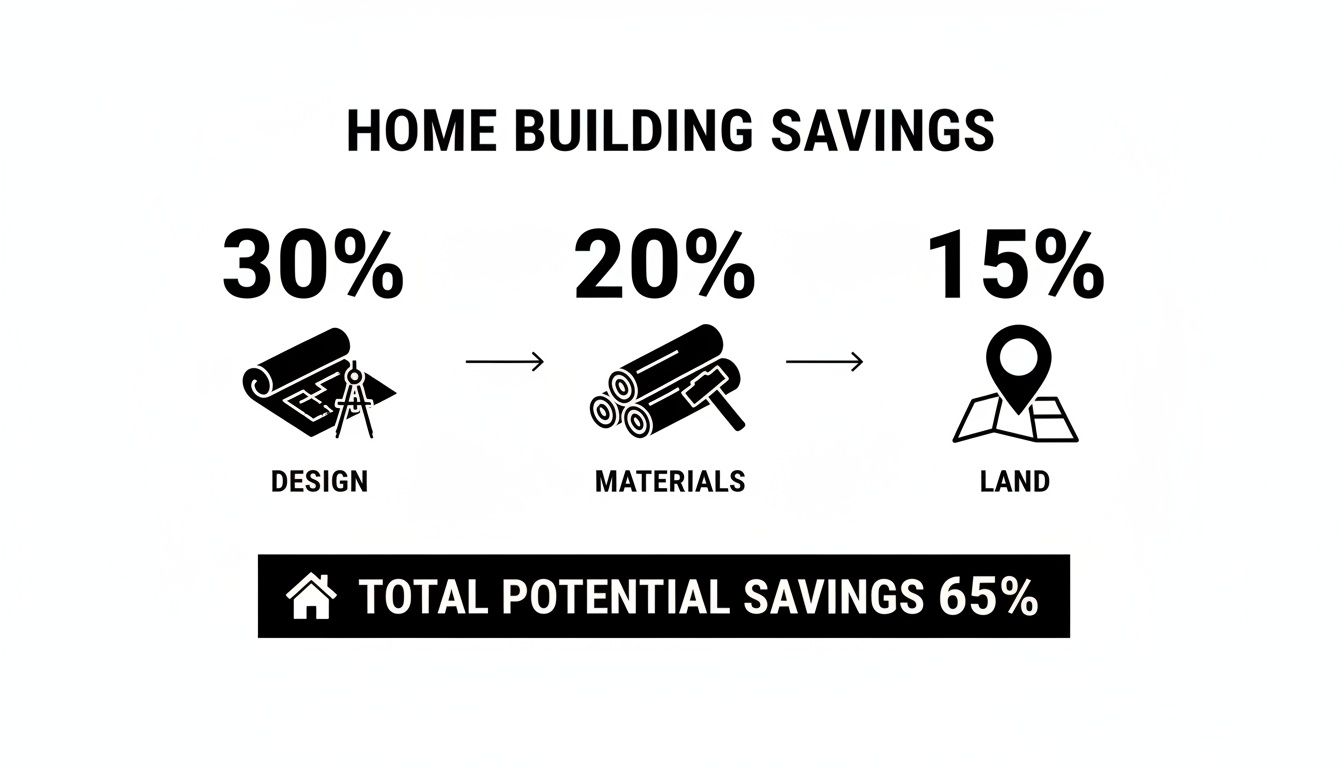
As you can see, the choices you make during the design phase pack the biggest punch, with materials and land not far behind. Nail these three areas, and you'll be building on a strong, affordable foundation.
To help you get started, here's a quick look at the most effective strategies for lowering your home building costs.
High-Impact Savings Areas in Home Construction
Strategy | Potential Savings | Key Action |
|---|---|---|
Efficient Home Design | Up to 30% | Simplify the footprint; opt for a rectangular shape over complex angles. |
Strategic Material Selection | Up to 20% | Source local materials and consider high-quality, cost-effective alternatives. |
Smart Land Purchase | Up to 15% | Choose a lot that requires minimal excavation and is already connected to utilities. |
By prioritizing these high-impact areas, you set the stage for a much more budget-friendly build without sacrificing the quality or features that matter most to you.
Saving Big with Smart Design and Planning
Your best chances to save serious money happen way before anyone picks up a hammer. It's in the pre-construction phase that smart design choices can significantly reduce your final bill, transforming a nail-biting budget into something you can actually manage. This is where you have the most control to head off thousands in spending down the line.
It’s easy for first-time builders to fall in love with complex, sprawling designs without seeing the hidden price tags. Every extra corner, jog in the wall, and complicated roofline adds a shocking amount to both material and labor costs. This is where simplifying your vision becomes your most powerful tool for saving money.
Embrace a Simple Footprint
Hands down, the most cost-effective homes to build are simple squares or rectangles. Think about it this way: a single large pizza is cheaper and uses less crust (your foundation and roof) than several small pizzas with the same total area. The same exact logic applies to your home's footprint.
A complicated shape with numerous corners and angles requires more foundation work, more complex framing, and a challenging roof structure. Each one of those things adds up fast. For instance, a simple gable roof over a rectangular house is significantly cheaper than a hip roof with multiple valleys and dormers.
Key Takeaway: A simple, boxy shape isn't boring—it's brilliant. It minimizes the most expensive parts of your build: the foundation and the roof. This one decision can be one of the biggest factors in saving money on a new house, right from the get-go.
By keeping the shape straightforward, you reduce material waste and the skilled labor hours required to assemble it. This idea is the backbone of many cost-effective house plans for your dream home, balancing great function with affordability.
Build Up, Not Out
When you need more square footage, the most cost-effective way to obtain it is by going vertical. Building a second story is significantly more budget-friendly than sprawling outwards.
Here’s why:
Reduced Foundation Costs: A two-story, 2,000-square-foot home has half the foundation and half the roof area of a single-story ranch of the same size. Since those are two of the priciest parts of any build, the savings are huge.
Efficient Plumbing and HVAC: Stacking bathrooms and kitchens allows for shorter, more direct plumbing and ductwork. That means less money spent on materials and labor for your mechanical systems.
Smaller Land Footprint: Building up also means you can use a smaller—and likely less expensive—piece of land.
This vertical approach really maximizes your living space for every dollar you spend on the home’s core structure.
Design with Standard Materials in Mind
Here's another powerful trick: design your home around standard material sizes. Most building materials—such as lumber, drywall, and siding—come in standard lengths, typically 8 feet, 10 feet, or 12 feet.
When your room dimensions and ceiling heights align with these sizes, you reduce waste from custom cuts. For example, if you design a room to be exactly 12 feet wide, a sheet of drywall fits perfectly without trimming. You save on the material itself and the labor it takes to cut. Any good architect or designer will know how to do this; it's a practice called value engineering.
An open-concept layout can also trim costs by simply eliminating some interior walls, which saves on framing, drywall, and finishing. And don't forget strategic window placement. In colder climates, putting fewer windows on the north side and more on the south side can lead to big savings on future energy bills through passive solar heating.
To generate more ideas, you can explore proven strategies to reduce construction costs without compromising quality. It all begins with a smart, deliberate plan that anticipates costs before they appear on an invoice.
Sourcing Materials and Exploring Alternative Construction
The materials you select and how you assemble them represent two of the largest line items on any construction budget. It's easy to feel stuck with standard, off-the-shelf options, but you actually have a ton of control here. Getting smart about sourcing and exploring modern building techniques can unlock significant savings, allowing you to stretch every dollar without compromising quality.
This part of the project emphasizes the importance of being resourceful. From the one-of-a-kind character of reclaimed wood to the factory-built precision of a modular home, there are so many ways to get to an affordable, beautiful house. It’s time to think beyond the big-box hardware store and traditional stick-framing.
The Charm and Savings of Reclaimed Materials
One of my favorite ways to save money—and add a ton of character—is by using reclaimed or salvaged materials. Architectural salvage yards, deconstruction services, and even online marketplaces are absolute gold mines for unique finds that add history and style to your home for a fraction of what new materials would cost.
I’ve seen clients have amazing success finding salvaged goods for high-impact areas:
Hardwood Flooring: Reclaimed hardwood often has a patina and quality that’s just impossible to replicate. Additionally, it's almost always more affordable than brand-new premium flooring.
Doors and Windows: An old solid wood door or a unique window frame can become a stunning focal point.
Beams and Mantels: Old-growth timber beams bring a rustic, substantial feel to a room that you can't get from new, engineered options.
Brick and Stone: Incorporating reclaimed brick into a feature wall or exterior accent adds instant texture and enhances curb appeal.
Finding these materials requires a bit of patience and a keen eye, but the payoff in both savings and style is substantial. Just be sure to inspect everything for structural integrity before you buy.
The Rise of Modular and Prefabricated Homes
Maybe the single most impactful way to control costs is to rethink the construction process itself. Modular and prefabricated construction, where big chunks of your home are built in a controlled factory setting, is a complete game-changer for budget-conscious builders.
The savings come from a few different angles. Building indoors means no more costly weather delays. The factory's streamlined process also significantly reduces material waste, as every cut is precise and leftovers are utilized in other projects.
A huge advantage of prefab is the reduction in on-site labor. With construction costs now making up a staggering 64.4% of a new home's price—up from 60.8% just a few years ago—slashing those expensive on-site hours is a direct and substantial saving.
This efficiency is a massive win, especially in areas with high labor costs. Industry data shows that modular construction can lower total building costs by up to 20-30% compared to traditional methods. That's a figure that really highlights the significant impact this strategy can have. You can explore more data on rising construction expenses and see why these savings are becoming more critical than ever.
Strategic Purchasing and Supplier Negotiations
Even if you stick with traditional materials, how and when you buy them makes a big difference. Never accept the first price you're given. I've found that building relationships with local suppliers can often get you much better deals than you'd find at the national chains.
Here are a few practical tips I always share for smarter material sourcing:
Get Multiple Quotes: For big-ticket items like lumber, roofing, and windows, always get at least three quotes. When suppliers know you're shopping around, they tend to sharpen their pencils.
Ask About Builder Discounts: If you're acting as your own general contractor, ask suppliers if they offer a builder or contractor discount. You'd be surprised how many will extend it to you.
Buy in Bulk: Consolidate your orders with one or two key suppliers. Placing a single large order for framing, sheathing, and drywall gives you significantly more negotiating power.
Time Your Purchases: Material prices fluctuate. Ask your suppliers about seasonal trends. For instance, lumber prices often dip in the winter when construction slows down.
Being a savvy shopper is a crucial part of saving money when building a house. A few well-placed phone calls and a little bit of negotiation can easily trim thousands of dollars from your material budget, freeing up cash for other priorities.
How Your Land Choice Impacts Your Total Budget
You've heard it a million times: "location, location, location." But when you're building a home from the ground up, that old real estate mantra takes on a whole new level of importance. The plot of land you choose isn't just a pretty backdrop; it's an active player in your budget, capable of creating massive savings or triggering some truly shocking cost overruns.
Picking the right piece of land really sets the financial tone for the entire project. So many aspiring homeowners get laser-focused on the asking price of a lot, but the real costs are often hiding just beneath the surface. A "cheap" piece of land can quickly become one of your most expensive mistakes if it's not ready for construction. This is where doing your homework pays off in a big way.
Look Beyond the City Limits
One of the most straightforward ways to save a bundle is to expand your search beyond those dense, high-premium urban centers. Land prices, permit fees, and even labor costs can be significantly lower in suburban or rural areas. Making just this one move can free up a significant portion of your budget for the house itself.
Choosing a more cost-effective location can reduce your total building expenses by 20-40% simply by avoiding inflated land and labor costs. The finished lot is often the second-biggest line item in a new home build, so opting for a suburban or rural plot can make a serious dent in your bottom line. While global construction inflation is starting to cool off, some markets are still experiencing high preliminary costs, making a smart location choice even more critical. You can gain a better understanding of how building expenses are trending in the latest construction cost reports.
Investigate What Lies Beneath
The physical characteristics of your land are just as critical as its address. A steeply sloped lot might offer a gorgeous view, but it can also demand thousands of dollars in extra excavation, retaining walls, and a more complex foundation. A flat, clear lot is almost always the most budget-friendly option to build on.
Soil quality is another hidden cost driver. If the soil conditions are poor, you may need to consider expensive engineering solutions or specialized foundations to ensure your home remains stable. Before you even think about buying, it's a smart move to get a soil test or a geotechnical report to understand exactly what you're working with.
Pro Tip: Never, ever underestimate the importance of a professional land assessment. Understanding the site's geology and topography can stop you from buying a "bargain" lot that ends up costing you a fortune in site prep.
A detailed analysis is essential for avoiding these costly surprises. This is something that's covered in a foundation survey, and you can learn more about what a foundation survey includes and why it’s a step you really can't afford to skip.
The High Cost of No Connections
Another major factor? Utilities. That undeveloped rural lot might seem like a steal until you start getting quotes for connecting to essential services.
Think about what it costs to get:
Electricity: Extending power lines from the nearest pole to your build site can cost thousands, and that price goes up with every foot of distance.
Water: If city water isn't an option, you'll need to budget for drilling a well. This can be a significant and sometimes unpredictable expense.
Septic: Without access to a municipal sewer system, you're looking at installing a septic system, a process that involves soil "perc" tests and hefty installation costs.
A lot that already has these utilities stubbed to the property line will have a higher purchase price, but it often works out to be far cheaper in the long run.
Finally, always investigate local zoning laws and building restrictions before you make an offer. Factors such as setbacks, height restrictions, or specific building codes can force you into expensive redesigns or even make your dream home impossible to build on that particular plot. A quick trip down to the local planning department can save you a world of headaches and money. Your land is the literal foundation of your project—choose it wisely to ensure your build stays on track and on budget.
Investing in Energy Efficiency for Long-Term Savings
Getting the keys to your new home isn't the finish line for savings. Actually, some of the smartest ways to save money when building a house involve thinking about the costs you won't have to pay over the next 30 years. Committing to energy efficiency upfront is a powerful financial move that dramatically lowers your cost of ownership for decades.
Although some energy-efficient features may have a slightly higher initial cost, their return on investment is undeniable. You'll see it reflected in your lower utility bills every month. But the perks don't stop there—you also benefit from potential tax credits and a higher resale value down the road. This isn’t just an environmental choice; it’s one of the savviest financial decisions you can make.
Building a Strong Thermal Envelope
Think of your home's thermal envelope as its first line of defense against the elements. It’s the physical barrier between your comfortable, conditioned interior and the weather outside. A well-built, tightly sealed envelope is like a high-quality winter coat for your house.
Three key areas create this protective layer:
Superior Insulation: Don't just meet the minimum code requirements. Investing in a higher R-value insulation for your walls, attic, and floors makes a massive difference. Spray foam, for instance, is a great option because it provides both insulation and air sealing in one go.
High-Performance Windows: Windows are a notorious weak spot for heat loss in the winter and heat gain in the summer. Upgrading from standard double-pane to triple-pane windows, especially those with low-E coatings, can significantly reduce the workload on your HVAC system.
Meticulous Air Sealing: All those tiny, almost invisible cracks and gaps around windows, doors, and where pipes enter the house can add up to the equivalent of leaving a window open all year. Proper air sealing is a low-cost, high-impact step that ensures the air you paid to heat or cool stays inside.
These elements work in harmony, creating a home that requires far less energy to keep comfortable, which translates directly into lower monthly bills.
A well-insulated and sealed home is the foundation of long-term savings. By reducing the load on your HVAC system, you not only cut energy consumption but also extend the lifespan of your most expensive mechanical equipment.
Smart Design for Passive Savings
Beyond the materials you choose, the actual design of your home can do a lot of the heavy lifting for you. Passive design is all about utilizing natural elements, such as sunlight, to help heat and cool your home, thereby reducing your reliance on mechanical systems.
A perfect example is simple house orientation. By placing most of your windows on the south-facing side of the house, you can capture free solar heat during the chilly winter months. Then, in the summer, properly sized roof overhangs block the high sun, keeping the inside cool. These are design choices that cost nothing extra but deliver savings year after year. For anyone interested in sustainable building, exploring the 8 best eco-friendly house plans for 2025 can offer some fantastic inspiration.
Planning for the Future
Thinking ahead during the build can save you a small fortune later on. Let’s say you can't afford a full solar panel system right out of the gate. You can still make your home solar-ready. This simply involves running the necessary electrical conduit from the utility panel up to the attic—a straightforward and cost-effective step during construction. Trying to retrofit this later could cost you thousands.
Choosing energy-efficient designs and materials is a proven strategy that can reduce your long-term homeownership costs by 15-25% through lower utility bills and available incentives. With construction accounting for a record 64.4% of home prices, any feature that can reduce your HVAC needs by 30-50% is a powerful hedge against rising operational costs. Building green isn't just about today; it's a financial decision that pays you back for a lifetime.
Managing Labor Costs and Using Sweat Equity
After you’ve locked in your design and materials, labor is the next big-ticket item on your budget. It’s also often the most unpredictable. This is where smart oversight and a bit of your own hands-on effort—what we call sweat equity—can pay off hugely.
Your goal is to find that sweet spot between contributing your own skills to save some cash and knowing when to step back. You absolutely don't want to venture into complex jobs that could risk your home's safety or quality. It’s all about knowing which tasks are DIY-friendly and which are best left to the licensed pros.
Vetting Contractors and Getting Multiple Bids
Here's the first rule of managing labor: never hire the first contractor you talk to. I can't stress this enough. Always get at least three detailed bids for any major job. This isn't just about chasing the lowest price; it's about comparing the scope of work, the materials included, and examining the contractor's reputation.
When you're looking over those bids, keep an eye out for a few things:
Detailed Line Items: Vague quotes, such as "Plumbing: $15,000," are a major red flag. A solid bid will break down the costs for materials, fixtures, and labor. You want to see exactly what you're paying for.
Clear Timelines: The contract should clearly outline the start and completion dates. It should also outline what happens if there are delays—because sometimes, they do happen.
Proof of Insurance: Always, always verify that any contractor you bring on site has both liability insurance and workers' compensation. Don't just take their word for it.
A well-vetted contractor might not have the rock-bottom price, but their reliability and quality will save you from costly mistakes and delays down the road. Trust me on that one.
Key Insight: That super-low bid can be tempting, but it often leads to surprise "add-on" costs later. A transparent, detailed contract is your best defense against budget overruns and ensures everyone is on the same page from day one.
The Power of Sweat Equity
Sweat equity is simply the art of trading your own time and skills for direct savings. It’s one of the most rewarding ways to cut your expenses, but it demands an honest look at what you can really do. A botched DIY job that a professional has to come in and fix will always cost you more than just hiring them in the first place.
So, what tasks are perfect for a capable DIYer?
Interior Painting: This is the classic sweat equity job for a reason. You can save thousands just by painting the interior yourself.
Landscaping: Basic tasks like laying sod, planting shrubs, and spreading mulch are labor-intensive but don't require a special license.
Installing Laminate or LVT Flooring: Modern click-lock flooring systems are designed to be pretty friendly for first-timers.
Final Cleanup: You can save a few hundred bucks on your builder’s final invoice just by handling the final site cleanup yourself.
On the flip side, some jobs should always be left to licensed professionals. I’m talking about electrical, plumbing, HVAC, and foundation work. These are non-negotiable. The safety risks and the potential for catastrophic (and incredibly expensive) mistakes are just too high.
By focusing your efforts on the finishing tasks, you can make a significant impact on your budget without incurring any unnecessary risk.
Of course, building a new home without breaking the bank brings up a lot of questions. It's easy to feel overwhelmed by all the decisions, but getting clear answers to the most common worries can make all the difference.
We've compiled the questions we hear most frequently from people like you. Here are some straightforward answers to help you understand where your money makes the biggest impact.
What Is the Single Biggest Way to Save Money When Building a House?
Your best chance to save big money happens in the design phase, long before a single nail is hammered. The secret? Keep it simple.
Opting for a smaller, simpler footprint—think a basic square or rectangle, perhaps two stories—is dramatically less expensive than a sprawling, complex layout with numerous corners and intricate rooflines. This one decision cuts costs on three of your biggest line items: the foundation, the roofing, and the exterior siding. A smaller, well-designed home isn't just cheaper to build; it's also cheaper to heat, cool, and maintain for years to come. It’s the single most powerful money-saving move you can make.
The secret to an affordable build isn't about sacrificing quality; it's about maximizing efficiency. A simple design forces smart use of space, often resulting in a more functional and livable home for a fraction of the cost.
Is It Cheaper to Act as My Own General Contractor?
On paper, yes. You could save the builder's typical 10-20% fee. But this is a high-risk gamble unless you have serious construction experience. A good General Contractor (GC) brings a ton to the table—they have established relationships with reliable subcontractors, they know how to navigate the maze of permits, and they can manage a tight schedule to prevent expensive delays.
For most people, the stress, potential for major mistakes, and risk of overspending far outweigh the theoretical savings.
How Much Can I Realistically Save with Sweat Equity?
This really depends on your skills and the amount of time you can realistically dedicate. You can definitely save thousands by tackling jobs like interior painting, landscaping, installing click-lock flooring, or doing the final cleanup yourself.
For example, painting the interior of an average-sized home can easily save you $5,000 to $10,000. The key is to be honest about your abilities. A DIY job done poorly that a professional has to come in and fix will cost you more in the end. It's usually best to stick to the cosmetic and finishing work.
At RBA Home Plans, we provide detailed, construction-ready blueprints designed to be both beautiful and cost-effective, helping you start your building journey on the right financial footing. Explore our diverse collection of home plans at https://rbahomeplans.com.


Comments