
8 Critical Home Inspection Red Flags to Watch for in 2025
You've found a house that seems perfect: it's in the right neighborhood, has the ideal layout, and fits your budget. Before you commit, however, a professional home inspection is the single most important step separating a sound investment from a potential financial catastrophe. This critical evaluation is designed to uncover the hidden problems lurking beneath the surface, issues that are impossible to spot during a casual walkthrough. Overlooking these serious defects can lead to devastating repair bills, long-term stress, and significant buyer's remorse.
To protect your investment, we've compiled the definitive list of critical home inspection red flags. Understanding these major warning signs is non-negotiable for any prospective buyer, from first-timers to seasoned investors. This guide provides more than just a simple checklist; it offers actionable insights into what each problem means for your wallet and your safety. Recognizing these issues empowers you to negotiate repairs from a position of strength, accurately budget for necessary future expenses, or make the difficult but wise decision to walk away from a deal that is simply too risky. Let’s explore the warning signs that inspectors and real estate experts agree you absolutely cannot afford to ignore.
1. Foundation Cracks and Settlement Issues
Of all the potential home inspection red flags, issues with the foundation are arguably the most critical. The foundation supports the entire weight of your house, and problems here can telegraph damage throughout the structure, leading to expensive and complex repairs. Ignoring these signs can turn a dream home into a financial nightmare.
Understanding the Signs
A home inspector will look for tell-tale signs of foundation distress. Not all cracks are cause for panic, but their type and location matter immensely.
Vertical Cracks: These are often due to concrete curing or minor settling and are typically less severe.
Stair-Step Cracks: Cracks following the mortar lines in brick or block walls often indicate differential settlement, where one part of the foundation is sinking faster than another.
Horizontal Cracks: These are the most serious. Horizontal cracks, especially in basement or crawlspace walls, can signal intense pressure from surrounding soil or hydrostatic (water) pressure, potentially leading to wall failure.
Beyond cracks, look for doors and windows that stick or don't close properly, and floors that slope or feel uneven. These are classic symptoms of a house that has shifted on its foundation.
Real-World Scenarios
Consider a historic home in an older neighborhood. Over decades, soil erosion and massive tree roots can cause significant foundation shifts, leading to the misaligned doors and windows mentioned above. In another example, a newer home built on Texas's expansive clay soil might experience severe seasonal movement, causing stair-step cracks to appear after a few years of wet and dry cycles. These are not just cosmetic issues; they are warnings of underlying instability.
Expert Insight: Any horizontal crack wider than a quarter-inch is a major red flag that demands immediate evaluation by a structural engineer. This isn't a DIY situation; professional assessment is non-negotiable.
Actionable Steps for Buyers
If your inspection report notes foundation concerns, don't walk away immediately. Instead, take measured steps:
Document Everything: Take clear photos and measure the width and length of any cracks.
Hire a Specialist: Engage a structural engineer or a dedicated foundation repair company for a secondary, more detailed evaluation. This expert can determine the cause and recommend a solution.
Get Quotes: Obtain detailed quotes for any necessary repairs to understand the full financial scope. This information is crucial for negotiating with the seller.
Understanding the stability of your potential home is paramount. A specialized evaluation, like a foundation survey, can provide the in-depth analysis needed to make an informed decision. For more information, you can learn what a foundation survey entails.
2. Roof Damage and Aging Shingles
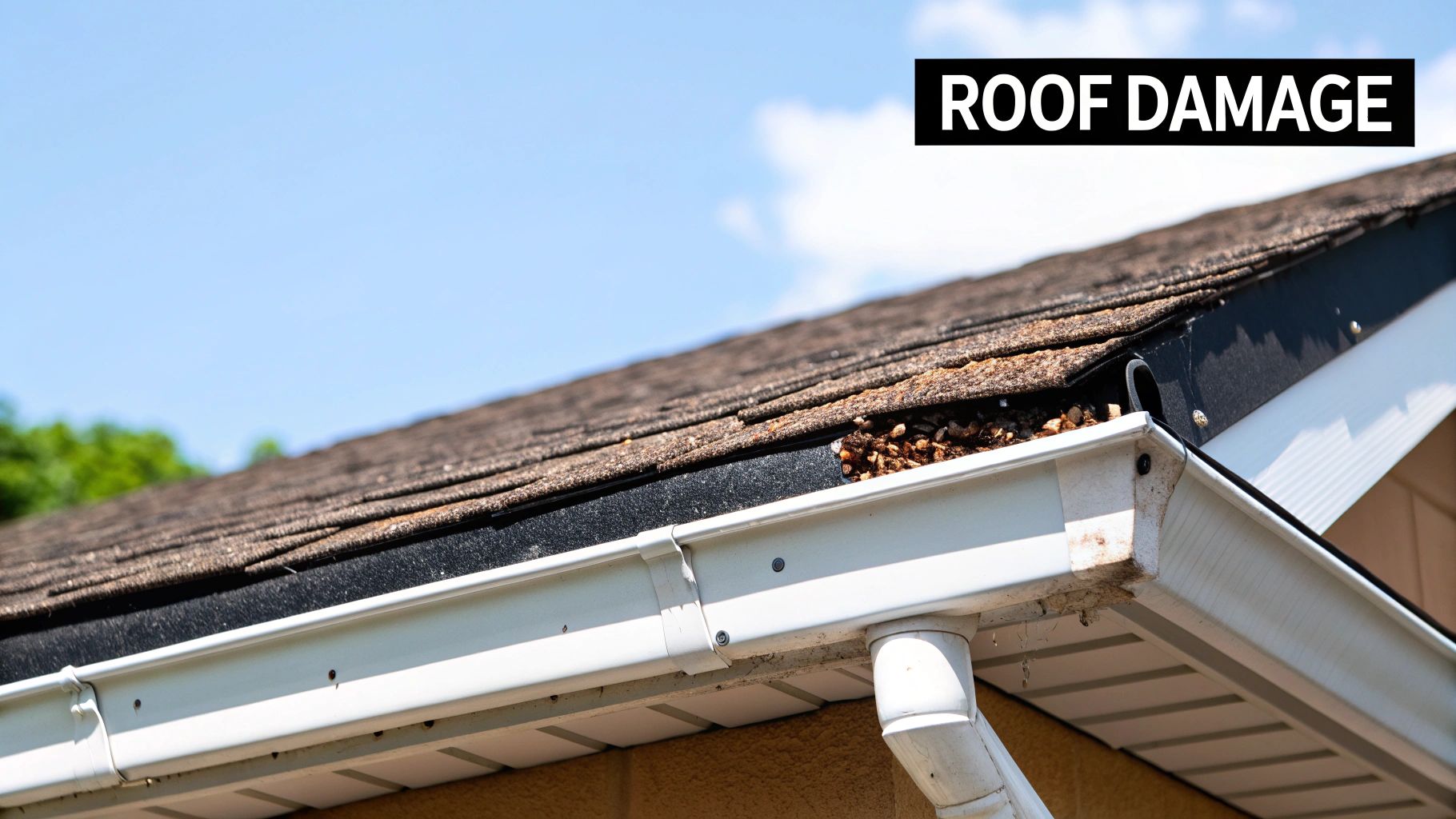
As the home's primary shield against the elements, the roof's condition is a non-negotiable inspection point. Problems that start on the roof rarely stay there, often leading to widespread water damage, mold growth, and even structural rot. Overlooking signs of a failing roof is a significant gamble, as a full replacement is one of the most expensive maintenance items a homeowner will face.
Understanding the Signs
A home inspector will meticulously check the roof's surface and the attic space below for any red flags. The age of a roof is a primary factor, as a standard asphalt shingle roof typically lasts 15-25 years.
Curling or Clawing Shingles: When shingle edges curl upward or the middle "claws" up, it’s a clear sign of aging and heat damage.
Missing or Damaged Shingles: Obvious gaps or cracked shingles expose the underlayment, creating direct pathways for water intrusion.
Granule Loss: Look for excessive "bald spots" on shingles or an accumulation of black sand-like granules in the gutters. These granules protect the shingles from UV rays.
Attic Stains: Water stains, damp insulation, or visible daylight coming through the roof deck are undeniable signs of active leaks.
Real-World Scenarios
Imagine a home in Florida where a recent hurricane has lifted and torn away numerous shingles, compromising its ability to withstand the next storm. In a colder northern climate, a home with poor attic ventilation may show signs of ice dams, which force water up under the shingles, causing rot along the eaves. A 20-year-old home with its original roof, showing extensive granule loss and curling, is not a future problem; it's a current one requiring immediate, costly replacement.
Expert Insight: Ask the seller for any documentation regarding the roof's age, last replacement, or major repairs. A roof that is more than 15 years old and shows signs of wear should automatically trigger a budget for a full replacement within the next few years.
Actionable Steps for Buyers
If the inspection reveals significant roof issues, you have several options for moving forward:
Request Documentation: Ask for any warranties, permits, or receipts related to the roof's installation or repairs.
Get a Roofing Specialist's Opinion: Hire a licensed roofer to perform a detailed inspection and provide an estimate for repairs or a full replacement.
Negotiate Costs: Use the professional quotes to negotiate the home's price, ask for a seller credit at closing, or request the seller to replace the roof before the sale.
The integrity of the roof is directly tied to the health of the entire home. Understanding how factors like the slope impact its longevity can be crucial; for more detail, you can explore this guide to roof pitch explained for homeowners.
3. Water Damage and Mold Growth
Where there’s water, there’s often trouble. Water damage and its frequent companion, mold, are significant home inspection red flags that can compromise a home's structural integrity and pose serious health risks. These issues can stem from a variety of sources, including roof leaks, plumbing failures, poor exterior drainage, or foundation seepage, making them a common yet critical finding.

Understanding the Signs
A skilled inspector knows that water damage isn't always obvious. They will search for subtle clues beyond a visible leak.
Stains and Discoloration: Yellow or brown stains on ceilings and walls are classic indicators of past or present leaks.
Musty Odors: A persistent damp, earthy smell, especially in basements, crawlspaces, or bathrooms, strongly suggests hidden moisture and potential mold.
Peeling Paint or Warped Surfaces: Bubbling paint, warped drywall, or soft spots in flooring can signal moisture trapped behind the surface.
While any mold is a concern, the presence of black mold (Stachybotrys) is particularly alarming due to its potential health effects. Many issues can be subtle and easily overlooked; therefore, it's essential to recognize these critical signs of water damage.
Real-World Scenarios
Imagine a flipped house with a beautifully finished basement. An inspector’s moisture meter reveals high readings behind the fresh drywall, uncovering a foundation leak that was simply covered up, not repaired. In another scenario, an attic inspection reveals blackened wood sheathing. This points to poor ventilation, which traps warm, moist air and allows mold to flourish, potentially requiring a costly roof and insulation overhaul.
Expert Insight: Mold you can see is often just the tip of the iceberg. If visible mold is present, assume there is a larger, hidden problem behind the wall or under the floor that needs to be professionally remediated.
Actionable Steps for Buyers
Discovering water damage or mold doesn't automatically kill the deal, but it requires immediate and careful action:
Identify the Source: Work with the inspector to determine the origin of the moisture. Is it an active plumbing leak, a roof issue, or a grading problem?
Request Specialized Testing: If mold is suspected, hire a certified mold remediation specialist to conduct air quality tests and a thorough assessment.
Get Remediation Quotes: Obtain detailed estimates from qualified professionals for both fixing the water source and completely remediating the mold. Use these costs to negotiate with the seller.
A comprehensive inspection is your best defense. Including moisture detection in your building inspection checklist ensures these hidden issues are brought to light. For a complete guide, you can review an ultimate building inspection checklist.
4. Electrical System Problems
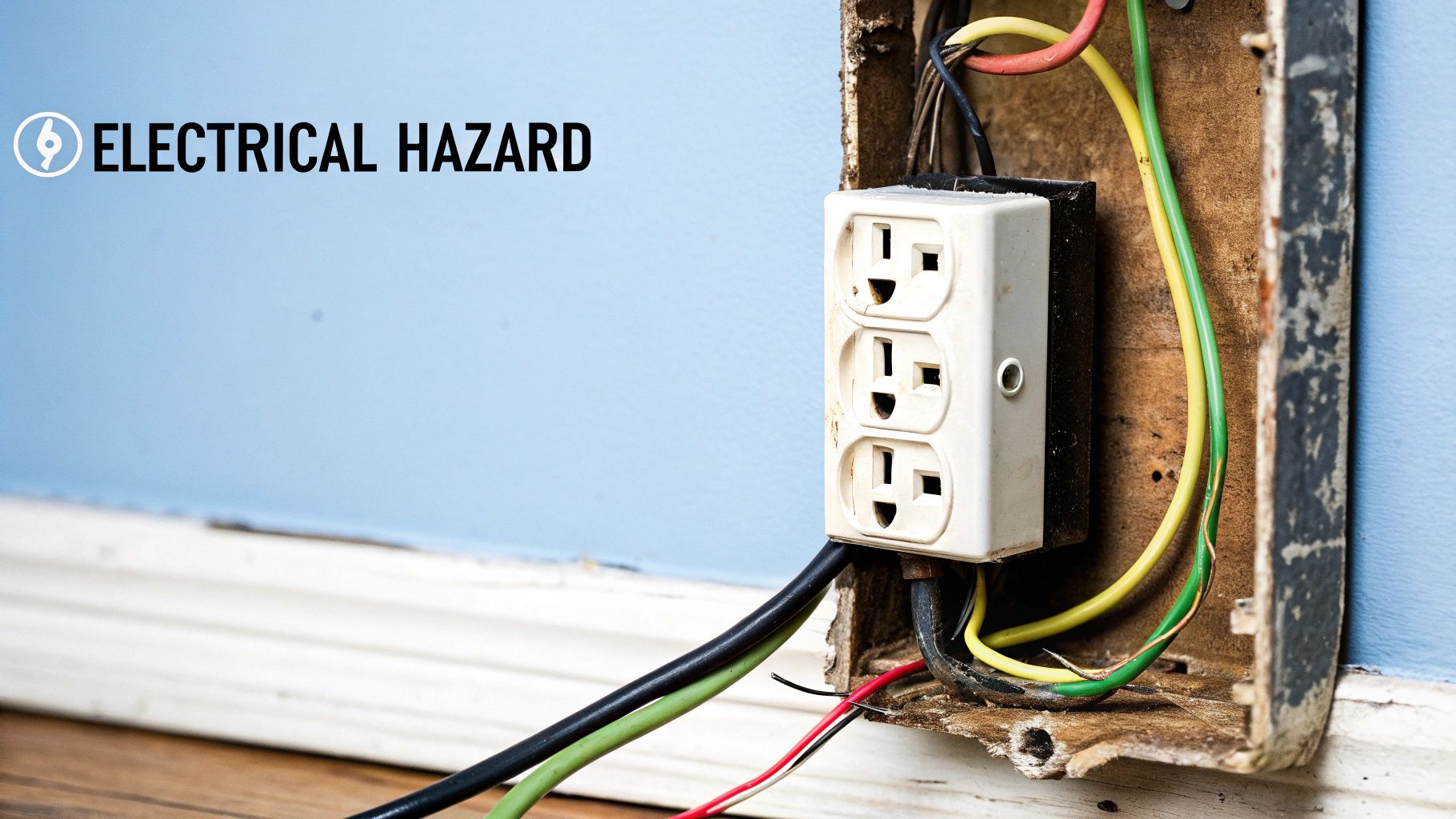
Electrical system deficiencies are among the most serious home inspection red flags because they pose significant fire and safety hazards. An inspector will scrutinize the electrical panel, outlets, and visible wiring for signs of trouble, but what they find can range from a simple fix to a complete and costly system overhaul. Understanding these issues is key to protecting both your safety and your investment.
Understanding the Signs
An inspector is trained to spot electrical hazards that the average buyer would easily miss. These problems often stem from outdated materials, inadequate capacity, or improper DIY work.
Outdated Wiring: Systems like knob and tube (pre-1950s) or aluminum wiring (common in the 1960s-70s) are major concerns. Aluminum wiring, in particular, can overheat at connection points, creating a severe fire risk.
Inadequate Capacity: An older home with a 60-amp service may be insufficient for modern electrical demands. Look for overloaded circuits or a panel that has no room for expansion.
Safety Deficiencies: Missing GFCI (Ground Fault Circuit Interrupter) outlets in wet areas like kitchens and bathrooms, ungrounded outlets, and reversed polarity are common but critical safety failings that need correction.
Obvious signs of amateur work, such as exposed wires, mismatched components, or messy connections in the breaker box, are immediate warnings of potential danger.
Real-World Scenarios
Imagine a 1970s home that appears well-maintained. An inspector identifies aluminum wiring throughout the house, which many insurance companies will not cover without costly remediation. Another common scenario involves a flipped house where the DIY electrical "upgrades" are not up to code, creating hidden fire hazards behind freshly painted walls. These are not minor flaws; they are liabilities that can endanger occupants.
Expert Insight: Any evidence of scorching, melting, or buzzing around outlets, switches, or the main electrical panel is a critical red flag. These signs indicate an active and dangerous electrical problem that requires immediate attention from a licensed electrician.
Actionable Steps for Buyers
If your home inspection uncovers electrical issues, proceed with caution and a clear plan.
Do Not Touch: Avoid investigating or touching suspect electrical components yourself.
Hire a Licensed Electrician: A general home inspector identifies potential issues; a licensed electrician can perform a full diagnostic evaluation to determine the extent of the problems and the cost to repair them.
Get Detailed Quotes: Obtain written quotes for all necessary work, from simple GFCI installation to a full home rewire. This documentation is essential for negotiating with the seller for repairs or a price reduction.
Electrical safety is non-negotiable. Addressing these red flags before you buy ensures your new home is a safe haven, not a hidden hazard.
5. Plumbing Issues and Pipe Deterioration
Hidden behind walls and beneath floors, the plumbing system is the circulatory system of a home. When it fails, the results can range from minor annoyances to catastrophic water damage. Among the most serious home inspection red flags are signs of systemic plumbing failure, which can lead to leaks, mold growth, and a complete re-piping project costing thousands.
Understanding the Signs
A home inspector will look for more than just a dripping faucet. They are hunting for clues that point to widespread problems within the pipes themselves. The age and material of the pipes are critical factors.
Visible Leaks and Water Stains: Obvious signs of trouble, often found under sinks, around toilets, and on ceilings below bathrooms.
Low Water Pressure: This can indicate significant corrosion or mineral buildup inside the pipes, restricting water flow throughout the house.
Pipe Material: Galvanized steel pipes (common before 1960) corrode from the inside out, while polybutylene pipes (used from the late 70s to mid-90s) are notoriously prone to sudden failure.
Discolored Water: A rusty or brown tint to the water suggests advanced corrosion within steel pipes.
Evidence of numerous small repairs or mismatched piping materials can also indicate a system that has been patched together over time and may be nearing the end of its functional life.
Real-World Scenarios
Imagine inspecting a 1980s home and discovering grayish, flexible pipes labeled "PB2110." These are polybutylene pipes, which were the subject of major class-action lawsuits due to their high failure rate. In another case, a charming 1950s bungalow might show signs of low water pressure and discolored water, pointing to galvanized pipes that are almost certainly clogged with internal rust and scale. These are not simple fixes; they are warnings of an impending, and expensive, full system replacement.
Expert Insight: The presence of polybutylene piping is a significant red flag. Many insurance companies will refuse to cover a home with these pipes, or will charge a much higher premium, making replacement almost non-negotiable.
Actionable Steps for Buyers
If your inspection reveals potential plumbing problems, a methodical approach is key to understanding the true cost.
Identify Pipe Material: Ask the inspector to identify the type of pipes used throughout the home and note their general condition.
Hire a Specialist: If significant issues are suspected, bring in a licensed plumber for a more thorough evaluation. They can use a camera to inspect drain lines and give a more accurate assessment of the supply lines.
Get Quotes for Re-Piping: If the home has outdated or failing pipes (like galvanized or polybutylene), get at least two quotes for a full re-piping job to use in negotiations.
Understanding the health of a home's plumbing is crucial for avoiding unexpected floods and costly repairs. For a deeper dive into common issues, you can read about identifying old plumbing pipes.
6. HVAC System Failures and Inadequate Heating/Cooling
A home’s heating, ventilation, and air conditioning (HVAC) system is one of its most expensive and critical components, directly impacting comfort, air quality, and monthly utility bills. When an inspector flags issues here, it’s a significant concern because replacement can cost thousands. An aging or failing system isn't just an inconvenience; it’s a major impending expense.
Understanding the Signs
An inspector will evaluate the HVAC system's age, overall condition, and performance. The typical lifespan for an air conditioner or furnace is 15-20 years, so a unit approaching this age is a red flag on its own.
Deferred Maintenance: Signs like heavily clogged filters, dirty coils, or corrosion indicate a lack of regular servicing, which shortens the system's life and reduces efficiency.
Poor Performance: The inspector will test both heating and cooling functions. Inadequate airflow, strange noises (banging or grinding), or a significant temperature difference between the air at the vent and the thermostat setting points to a problem.
Improper Installation: Leaky ductwork, often found in attics or crawlspaces, can cause massive energy loss. An undersized system will struggle to heat or cool the home effectively, running constantly and driving up energy costs.
Real-World Scenarios
Imagine touring a home where the original 1990s AC unit is still in place. While it may function during the inspection, it's living on borrowed time and will likely fail soon, requiring a costly replacement. In another case, a beautifully renovated home might have an updated HVAC unit but still suffer from hot and cold spots. This often points to poorly designed or leaking ductwork, an issue that compromises the efficiency of even the newest system. These are critical home inspection red flags that affect both comfort and budget.
Expert Insight: Ask the seller for maintenance records. A system that has been professionally serviced annually is a much safer bet, even if it's older. Lack of records often correlates with a lack of care and potential underlying issues.
Actionable Steps for Buyers
If the inspection reveals HVAC concerns, proceed with caution and gather more information before making a final decision.
Check the Age: Locate the manufacturer's data plate on the indoor and outdoor units to determine their age.
Hire an HVAC Specialist: A general home inspector's evaluation is a good start, but a licensed HVAC technician can perform a more thorough diagnostic, checking refrigerant levels, heat exchanger integrity, and ductwork efficiency.
Get Quotes for Repairs/Replacement: If the system is old or needs significant repairs, get at least two quotes from reputable companies. This data is essential for negotiating a lower price or a seller credit to cover the future expense.
7. Structural Damage and Wood Rot
While foundation issues grab headlines, the integrity of the home's wooden framework is just as critical. Structural damage from pests like termites or decay from wood rot can silently compromise the safety and stability of a house. These are significant home inspection red flags because they attack the very bones of the structure, often leading to costly and invasive repairs.
Understanding the Signs
A home inspector is trained to spot the subtle and not-so-subtle indicators of compromised wood structures. They know that moisture is the primary culprit behind rot, while certain insects feed on the wood itself.
Wood Rot: This is fungal decay caused by prolonged exposure to moisture. The inspector will probe wooden elements like sill plates, floor joists, and window frames. If the wood is soft, spongy, or crumbles easily, it's a clear sign of rot.
Termite Damage: Termites consume wood from the inside out, often leaving a thin veneer of wood or paint. Inspectors look for mud tubes on foundation walls, hollow-sounding wood, and maze-like "galleries" within damaged timber.
Other Pests: Carpenter ants and powderpost beetles also cause wood damage. Signs include small piles of sawdust-like frass (insect waste) and tiny, round exit holes in the wood.
Real-World Scenarios
Imagine a charming older home with a damp, poorly ventilated crawlspace. An inspector discovers extensive wood rot in the main support beams and floor joists, requiring thousands of dollars to replace the compromised members and add a vapor barrier. In another case, a home in a warm climate might show evidence of previous termite treatment, but an active infestation is found in the sill plates. This necessitates immediate fumigation and structural repairs, costs the buyer had not anticipated.
Expert Insight: Any sign of active pest infestation or significant wood rot warrants an immediate, specialized evaluation. Probe suspicious wood with a screwdriver; if it sinks in easily, the damage is likely more than superficial and requires a professional opinion.
Actionable Steps for Buyers
Discovering structural wood damage doesn't automatically kill a deal. Your next moves are crucial for making a sound investment.
Schedule a Pest Inspection: If not already done, hire a licensed pest control company for a "Wood-Destroying Organism" (WDO) report. This provides a detailed analysis of any active infestations or past damage.
Assess Structural Integrity: For widespread rot or termite damage, a structural engineer should evaluate the extent of the compromise and outline the necessary repairs.
Get Repair Quotes: Obtain detailed estimates for all required work, including pest treatment, removal of damaged wood, structural reinforcement, and addressing the root cause (e.g., fixing leaks). Use these figures to negotiate a price reduction or seller credit.
8. Unsafe or Outdated Safety Features
While not as structurally dramatic as a foundation issue, outdated or missing safety features represent a significant home inspection red flag. These elements are designed to protect occupants from everyday accidents, and their absence or poor condition can expose a family to unnecessary risks. Modern building codes have evolved significantly, and older homes often lack the protections now considered standard.
Understanding the Signs
An inspector will systematically check for required safety measures throughout the property. These are not merely suggestions; they are critical components for preventing injury and ensuring the home is a safe environment for everyone.
Missing or Improper Guardrails: Decks, porches, and stairways over 30 inches high require guardrails. An inspector will check for their presence, height (typically 36-42 inches), and spindle spacing (gaps should be less than 4 inches to prevent a child from passing through).
Lack of GFCI Protection: Ground Fault Circuit Interrupter (GFCI) outlets are required in areas where water and electricity mix, such as kitchens, bathrooms, and garages. These devices shut off power instantly if they detect a short, preventing electrocution.
Inadequate Smoke and CO Detectors: An inspector will verify the presence, placement, and age of smoke and carbon monoxide detectors. Outdated or missing units are a serious life-safety hazard.
Poorly Maintained Vents: Clogged vents, especially for dryers, can pose a serious fire risk due to lint buildup. To protect your family and your home, it's crucial to be aware of the 5 warning signs of clogged vents.
Real-World Scenarios
Imagine a charming split-level home from the 1970s. Its short flight of stairs leading to the family room may lack a handrail entirely, creating a fall risk for children and the elderly. In another case, a home with a beautifully renovated bathroom might still have old, two-prong outlets near the sink, completely lacking modern GFCI protection. These seemingly small omissions can have dangerous consequences.
Expert Insight: Any deck or elevated porch with wobbly handrails or wide spindle spacing is an immediate hazard. An inspector will flag this as a priority repair, as it presents a direct risk of falls, especially for households with small children.
Actionable Steps for Buyers
If your inspection report identifies missing or outdated safety features, these issues are typically straightforward to address and should be part of your negotiation strategy.
Prioritize Life-Safety Items: Focus first on critical issues like missing smoke/CO detectors and the absence of GFCI outlets in required locations.
Evaluate Structural Safety: For missing handrails or guardrails, assess whether the fix is a simple installation or requires more significant structural work.
Get Quotes for Upgrades: Obtain estimates from licensed electricians and contractors to understand the cost of bringing the home up to modern safety standards. This data empowers you to request repairs or a seller credit.
8-Point Home Inspection Red Flags Comparison
Issue | Implementation complexity | Resource requirements | Expected outcomes | Ideal use cases | Key advantages |
|---|---|---|---|---|---|
Foundation Cracks and Settlement Issues | Very high — structural repairs and engineering often required | High cost and effort (≈ $5,000–$50,000+); foundation specialists, heavy equipment, long disruption | Restored structural stability if properly repaired; reduces water intrusion and progressive damage | Homes with horizontal cracks, bowing walls, uneven floors, or known poor soils | Prevents catastrophic failure if caught early; minor cracks can be sealed |
Roof Damage and Aging Shingles | Moderate — patching simpler; full replacement more involved | Moderate cost (repairs $500–$2,000; replacement $5,000–$15,000); licensed roofers, materials, safety equipment | Re-established weatherproofing; prevents leaks, mold, and attic damage; improves curb appeal | Missing/curled shingles, granule loss, roofs >15–25 years, leak evidence | Maintenance can extend life; replacement increases value and protection |
Water Damage and Mold Growth | High — remediation plus source repair; may require demolition | Moderate–high cost ($2,000–$10,000+); mold remediation pros, moisture control, possible relocation | Eliminates active mold, improves indoor air quality, prevents recurrence if moisture source fixed | Visible mold, musty odors, water stains, chronic damp basements/crawlspaces | Protects occupant health; targeted remediation effective when source addressed |
Electrical System Problems | High — panel upgrades and rewiring require licensed electricians and permits | Moderate–high cost ($3,000–$8,000+); electricians, permits, possible wall access | Restored electrical safety, reduced fire/shock risk, supports modern loads | Aluminum wiring, knob-and-tube, two‑prong outlets, undersized service | Significant safety improvement; may improve insurance and functionality |
Plumbing Issues and Pipe Deterioration | Moderate–high — localized repairs simpler; full re-pipe invasive | Variable cost (repairs $500–$3,000; re-piping $4,000–$15,000+); plumbers, materials, wall access | Stopped leaks, restored water quality/pressure, prevents further water damage | Galvanized or polybutylene piping, visible leaks, discolored water | Modern piping (PVC/copper) is durable; fixes prevent ongoing damage |
HVAC System Failures and Inadequate Heating/Cooling | Moderate — unit replacement or ductwork work required | Moderate–high cost (repairs $500–$2,000; replacement $5,000–$15,000+); HVAC techs, possible duct modification | Improved comfort, efficiency, and indoor air quality; lower operating costs | Systems >15–20 years, inconsistent temperatures, noisy or leaking units | New systems increase efficiency and comfort; maintenance extends life |
Structural Damage and Wood Rot | Very high — structural remediation often complex and invasive | High cost and expertise ($2,000–$25,000+); structural contractors, pest control, engineer input | Restored structural integrity when repaired; eradicates infestations and rot | Soft/spongy wood, termite evidence, sagging floors, visible decay | Early treatment limits spread; professional solutions available for most infestations |
Unsafe or Outdated Safety Features | Low–moderate — many fixes are simple; some require structural work | Low to moderate cost ($100–$500 for devices; $500–$3,000+ for structural fixes); basic contractors/electrician | Reduced injury/liability risk; improved code compliance and occupant safety | Missing detectors/GFCIs, inadequate guardrails, unsafe attic access | Often affordable upgrades that increase safety and marketability |
Building Your Future on Solid Ground
Navigating a home inspection report can feel like deciphering a complex code, especially when it’s filled with potential issues. From the subtle signs of foundation settlement to the overt warnings of an aging roof, each discovery serves a critical purpose. It is not meant to discourage you, but rather to empower you. Understanding these common home inspection red flags transforms you from a hopeful buyer into a savvy, informed investor prepared to make a sound decision for your future.
The key is to view the inspection not as a simple pass-or-fail test, but as a detailed diagnostic tool. The eight major areas we've explored, including structural integrity, water intrusion, and outdated electrical systems, represent the core health of a property. A single, isolated issue may be a simple fix, but a pattern of neglect across multiple systems often signals deeper, more costly problems hiding beneath the surface.
From Red Flags to Green Lights
So, what are your next steps when faced with a concerning report? The path forward is rarely black and white. Instead, it’s about strategic action and negotiation.
Quantify the Problems: Immediately engage with qualified professionals, such as structural engineers, electricians, or roofers, to get detailed estimates for repairs. Vague inspector notes become concrete financial figures.
Negotiate from a Position of Power: With firm quotes in hand, you have powerful leverage. You can request the seller perform specific repairs, ask for a price reduction to cover future costs, or negotiate for a seller credit at closing.
Know Your Deal-Breakers: Decide which issues you are willing to take on and which are absolute non-starters. A leaky faucet is a weekend project; a failing foundation is a significant financial and emotional commitment. Knowing your limits is crucial.
Ultimately, mastering the art of interpreting an inspection report is about mitigating risk and protecting your most significant investment. It ensures the home you fall in love with is not only beautiful on the surface but is built on a foundation of safety, stability, and long-term value. This knowledge gives you the confidence to either proceed with a purchase, renegotiate the terms, or walk away knowing you avoided a potential disaster. Your dream home should be a source of security, not a constant stream of unexpected, expensive repairs. By paying close attention to these red flags, you are not just buying a house; you are building your future on truly solid ground.
Tired of worrying about the hidden problems lurking in an existing home? Take control of your future by building a home designed for quality and safety from the start with RBA Home Plans. Explore our award-winning, builder-ready blueprints at RBA Home Plans and start your journey toward a home built with integrity, not red flags.


Comments